Showing posts with label the belgariad. Show all posts

Sunday, November 29, 2015

Eddings [Reference] The Rivan Codex (1998)


Finally, the last volume in the Belgariad / Malloreon saga (I wish there were an overarching name for the entire thing, but alas).  This is a somewhat unique book, as it's a mix of reference material and essays on the world and writing process.  It would be akin to The World of Robert Jordan's The Wheel of Time if Jordan had also explained why he did things the way he did.

Before you continue:
  • This is part 13 of my The Belgariad and The Malloreon retrospective
  • See this blog post for an overview of the retrospective
  • These blogs are most effective with your own re-read of both series
  • Warning: CONTAINS SPOILERS FOR BOTH SERIES

What I Already Knew

Reviews of this book were generally positive, and I was anxious to read it... but in the end I skimmed through most of it, as chunks of it were material I'd already read in the main narrative of The Belgariad and The Malloreon.  Like the "Book of Alorn" that Belgarath recites way back in Pawn of Prophecy - it's almost lifted word by word from this.  Most of the prologues throughout the two series come from these notes.  Which makes sense, considering that much of this material was background made beforehand, to give them a foundation from which to write the story.

There are sections with holy texts for each race, and then sections on the history of each race and country.  These take up most of the book, and I skipped most of it.  Seriously, there are dozens of pages dedicated to the entire succession of Tolnedran Emperors (yes, every single one) - something that I was not the least bit interested in.

The Malloreon Gospels are in here, which I did read, as well as a section at the end from the personal journal of King Anheg, which appears to be set up for the storyline of The Malloreon, as it focuses on the events leading up to it and into the first book, Guardians of the West.

So I probably only read about 1/4 of the book.  All of the racial minutiae I didn't care about.  But it certainly was an interesting look into the amount of preparation that went into creating this series.  As a writer myself, it's always helpful to see how successful authors go about creating and writing in a world.  Although in the end there's no right or wrong way to do it... it's all up to the individual author and how they work best.  I personally have never gone into that much detail regarding a race or people when plotting something.  It would bore me to tears.  I want to get on with the writing!

What I Didn't Know

I had no idea Eddings had such a substantial background in medieval literature.  This is covered in the Introduction of the book, which is the most interesting part of it, though most of it reads like a condescending lecture (more on that below).

Since much of his writing was done pre-Internet, there aren't the typical fansites that crop up while a series is being written, with the inevitable wealth of information you generally can get on a writer in the current Internet age.  So there was very little I knew about his personal life, even now.  He says in the Introduction that he is very private, and that it's going to stay that way.  Mission accomplished, I suppose.

Anyway, Eddings spends a lot of time in the Introduction explaining the roots of contemporary fantasy and how you should respect medieval literature above all (which explains why he was so good at writing "High Style" dialogue - thee and thou, etc).  He also originally intended to do just a trilogy, but Lester Del Rey (the publisher) said it had to be five books due to the length limitations bookstores would impose on them (shelf space = premium).

Eddings then goes on to say that "you're not qualified to write epic fantasy until you've been exposed to medieval romance," which I think most people (including myself) would disagree with.  Maybe 40 years ago, when there weren't many epic fantasies on the shelves, this would be true, but today... not so much, unless you want to be formulaic and boring.  It doesn't hurt to know (I took a medieval literature course in college for my own amusement), and it's certainly influenced modern works such as George R.R. Martin's A Song of Ice and Fire and Robert Jordan's The Wheel of Time, but necessary?  You can get along without it.

One thing I do agree with, though, and what most writers will tell you, is to write every day, as often as you can, and to toss your early work.  I wrote dozens of short stories and four novels before I decided I had one good enough to publish (Bonebearer).

Confirmations!

Most of my theories or thoughts from previous blogs on the series were confirmed here.  I'm only going to discuss the major ones that have always bothered me.

Anachronistic Cultures
Eddings confirms that he deliberately drew from different cultures from across the globe, though some differ from my guesses.  Here's what he said they correspond to:

Sendars = rural Englishmen
Arends = Norman French
Tolnedrans = Romans
Chereks = Vikings
Algars = Cossacks
Ulgos = Jews
Angaraks = Hunnish/Mongolian/Muslim/Visigoth

None of the rest had a specific analog in our world.  I got a few of them right, though, and of course the anachronism is intact, as not all of those cultures/races are from the same time period in our history.

Malloreon Made Up Later
Eddings also confirms that much of The Malloreon continent and backstory was not created until after The Belgariad was done and they had to come up with another story.  Which is what it totally feels like, especially with the contradictions that come up between the two series.

Ideally, you don't need to detail all of the backstory and history in order to write a series.  Sometimes you don't need it until you have to make it up as part of the narrative (which I have done).  However - you should always try to make it fit into what you have so far.  Avoid contradictions and inconsistencies like the plague, as there are plenty of sharp-eyed readers who will gleefully point them out.

The Prophecies Don't Exist
That's right, he never actually wrote out the entire Mrin or Darine Codex - the impetus for much of the story.  As he says, they are a literary device and nothing more, used to occasionally set our characters on a new course of action.  He simply came up with lines as needed.  That's all.

Retrospective Conclusion

So there you have it.  I'm not going to create a separate blog post to "conclude" this Retrospective, like I did for The Wheel of Time, with things like favorite volumes, characters or scenes.  First, because I don't feel it needs one, and second, I want to be done with this Retrospective.  You'll note that I didn't even talk about the cover this time!  Lucky you.

Instead, I'll just wrap things up with the below:

The Belgariad and The Malloreon are not paragons of modern fantasy, but they will always hold a special place in my heart, as they are the first fantasy series I ever read.  I notice so many holes and issues with it now, but they still remain fun and nostalgic for me.  I would recommend them for young readers as a perfect entry into the world of fantasy.  Are you ready?

I'm thankful Eddings stopped doing "honest work" to write these two series.  They had a great effect on my life and my own writing.  Many people may scoff at it these days, but I'll never get rid of my copies, and I'll continue to read it every few years, no matter how old I get.

Online References

One last thing.  Throughout this Retrospective, I've referenced a few Eddings-centric websites.  There aren't many, but if you want to explore sites that actually still exist, here you go:

The David Eddings Wikia
Eddings Chronicles
Guardians of the West
alt.fan.eddings
The Eddings Trivia Page

Note that most of the links on the latter two sites are dead.  One is even linked to Geocities!  The content is somewhat outdated as well.  The Wikia site is pretty much the only currently maintained site on Eddings and all his (and Leigh's) works.

Previous:

Related Works
Novel - Polgara the Sorcerer
Novel - Belgarath the Sorcerer

The Malloreon
Book 5 - The Seeress of Kell
Book 4 - Sorceress of Darshiva
Book 3 - Demon Lord of Karanda
Book 2 - King of the Murgos
Book 1 - Guardians of the West

The Belgariad
Book 5 - Enchanter's End Game
Book 4 - Castle of Wizardry
Book 3 - Magician's Gambit
Book 2 - Queen of Sorcery
Book 1 - Pawn of Prophecy

Thursday, April 16, 2015

Eddings [Novel] Polgara the Sorceress (1997)


Eddings followed up his first fake autobiography, Belgarath the Sorcerer, with a second one, told by Belgarath's daughter, Polgara.  Just like her father's, it clocks in at over 700 pages and drags in places.  Sometimes there's no need to retell the same events from a different perspective.  Especially when they contradict things yet again.

I honestly don't remember when I first read this book... but I do remember that I had a Science Fiction Book Club version (you know, the smaller hardbacks), so it was probably around 1998, after I left college and got a job.  I donated the book 4 years ago when I moved across the country, so I had to go find another copy for this re-read.  Sadly, it's not in ebook format yet.  The Rivan Codex, which is the final book I'll be doing in this retrospective, is the only one in ebook format for some reason.  Del Rey's probably too lazy to OCR / scan in the original text.

Since many of the things I talked about in the previous blog for Belgarath the Sorcerer apply to this book, I'm going to instead talk about each major section and my thoughts.  Overall this book is okay... it's on par with Belgarath, but neither of the autobiographies are as good as either main series.  It's really only worth reading if you absolutely love the Belgariad and Malloreon, and can't get enough.

Before you continue:
  • This is part 12 of my The Belgariad and The Malloreon retrospective
  • See this blog post for an overview of the retrospective
  • These blogs are most effective with your own re-read of both series
  • Warning: CONTAINS SPOILERS FOR BOTH SERIES

The Cover

First, the cover.  As usual, nothing special.  Polgara in front of the Tree in the Vale with an owl on her wrist, presumably Poledra, her mother.  


There are different versions, of course - and a decent amount of fan art for Polgara out there, since she's a very distinctive character - but this one below is probably my favorite.


You can find more covers on the David Eddings Wiki.

Part 1: Beldaran

This first section covers Polgara's childhood and her bond with Beldaran, her twin sister.  It always seemed weird that Polgara was a tomboy growing up, though compared to how long she's lived (4,000 years) it's only seconds in the grand scheme of things.

A few major things happen here.  Polgara learns that she has the power of the Will and the Word, while Beldaran doesn't.  She learns that her mother, Poledra, didn't die giving birth to her, and that she had to hide as part of the Purpose they are all following (the eventual Godslayer and new God of Angarak that will fix the Mistake).  Poledra, it seems, has been with Polgara all this time.  I don't believe Polgara mentions that she had always been guiding her in the Malloreon, but I could be wrong.  It feels like something Eddings threw in later.  It works better than some of the other inconsistencies, though.

The last thing of importance is Polgara essentially becoming the guardian of the Rivan line.  She hears the Voice of Prophecy as well... it's the same inconsistency that popped up in the Belgarath book.

Part 2: Father

In this section, Polgara becomes closer to her father, learns what it means to be part of this elite group of Disciples, and comes to terms with her own abilities.  You get a better insight into what went on at Riva in the early days, for she spends a lot of time there, learning things like healing, herbs, surgery, etc.   She and Belgarath visit the Mrin and Darine prophets, whose ramblings are recorded down as the Mrin and Darine Codices that become important later.  Also, she kind of falls in love for the first time, with a Rivan named Kamion, who becomes the first Rivan Warder.

Now, they call him Brand in this one, but I could have sworn back in the Belgariad and Malloreon, that the title of Brand only came into being after the assassination of King Gorek, when the Rivan line went into hiding.  But I could be wrong.

Part 3: Vo Wacune

Honestly, this section is pretty boring.  It's part of why it took me so long to do this retrospective.  I simply got bogged down in it and frequently read other things.

Polgara is tasked with going to Arendia and keeping the Angaraks from meddling in their affairs and potentially pushing the West into war, much like I had to push myself through this section.  It's quite dull and could have been done in maybe two chapters.

I guess Eddings was trying to establish why Polgara loved Vo Wacune so much.  It does explain how she became the Duchess of Erat and all that, which was nice to see.

Part 4: Ontrose

Ontrose is the next person that Polgara falls in love with.  She actually wants to marry him.  Belgarath says this is not possible, of course, because Ontrose will grow old and die, while Polgara won't.  This section mostly continues the storylines in the previous section, so it's just about as boring.

There's also an offhand remark in this section about how Polgara hadn't seen Belgarath in a few centuries, and you have to stop and think.  What is it like to not see someone for two centuries?  What do you say when you finally meet up?  According to Polgara, this is what you say:

"Well, Old Wolf, what have you been up to?" 
"Not too much, Pol."

Part 5: Geran

Vo Wacune falls at the beginning of this section.  Ontrose eventually dies in battle.  Finally done with Arendia.

See, I can flippantly disregard decades with a few sentences too!

The book picks up soon after.  The Rivan King, Gorek, and his family is assassinated by the Nyissans - all except their youngest son, Geran, one of many in the line named Geran.  Polgara and Belgarath rescue him and she becomes the guardian of the line, protecting them until the Godslayer comes.  They spend time at her Erat estate and then begins the long wait... moving around to various places in Sendaria and the Alorn Kingdoms.  Our old pal Chamdar (Asharak, whom Garion killed in Queen of Sorcery) pops up from time to time.

I've always wondered, why not just hide in Cherek from the start?  It's not easy for Angaraks to go to any of the Alorn Kingdoms; the line would be pretty safe.  Polgara does move them to Cherek and Drasnia and Algaria later, but I've never understood that.  I know they had to move because Polgara never ages and people would wonder... but still.

Also, working in the realm of prophecy... why should they be worried?  Countless times do the Angaraks try to end the line or this or that, and it never works.  Why would the prophecies be created if they weren't going to be fulfilled?  Prophecy can be a mess sometimes.

Part 6: Vo Mimbre

Pretty obvious what this section covers.  We don't learn a whole lot more than we knew before.  At this point you should know the story of Vo Mimbre.  Especially since there will be a test later.

We actually get to see Torak in this section, though, which is cool, since you rarely get to see him at all in the series.

Part 7: Annath

This last section deals strictly with the Rivan line and the birth of Garion.  Annath is the town he was born in, where Polgara moved his grandfather, a stonecutter.  It's a good section and probably the best of the book.  Despite knowing how it ends, it's nice to see it finally fit together.

There is a really good part at the beginning of this, though.  It's about Gelane, one of the Rivan line.  He survived Vo Mimbre in the Algarian Stronghold and he knew who he was from an early age.  He never seemed content to be just a normal person and later gets involved with the Bear Cult.

It's a welcome change from the constant descendants that simply accept everything and lead normal lives.  As I was reading, I wondered why weren't more upset that they had to hide?  What if one of them did not want what Polgara wanted, i.e. to take up a simple trade and live in obscurity.  Gelane is the closest we get to that, but I wanted more.  How would she have dealt with someone who was apathetic and totally resistant to what she wanted?  Would have been a cool dynamic.

Other Notes

Just a few things I want to comment on before wrapping this up.

At a point in the Vo Mimbre section, I believe, Poledra tells Polgara that the Events and Meetings all come down to simple choices.  I'm pretty sure that in the Malloreon, they didn't know this until they visit the Seers at Kell.  I remember Belgarath or Beldin remarking that every Meeting between the Child of Light and Child of Dark probably had a Seer lurking around somewhere making a Choice.  But I could be wrong.

Towards the end of the book, Alara is devastated by her son Darral's death (Darral is Garion's real grandfather) and goes mad.  Ildera (Garion's mother) asks why Polgara can't just fix it with, you know... waves hand about.  Polgara says the mind is complicated and it doesn't work that way.  And yet... earlier in this book she's erasing memories from people for various reasons.  Poledra actually teaches her how to do this.  Um, okay.

There's more confirmation about the concept that everything is stuck in a loop until the Mistake is corrected.  Polgara comments on this in regards to Brand.  And that probably had something to do with the "ordinariness" of the males in the Rivan line that she protected.  Just keep chugging along, status quo, until it's fixed.

A final note about the line of Rivan Kings.  It would be strange to live for so long and see the line come and go.  Protecting them, keeping it secret, waiting for the Godslayer to come.  Eddings could have made this more tragic than it turned out to be.  Polgara often left to do other tasks, so she had breaks here and there, and she rarely seemed to get close to anyone after Ontrose.  She does get upset on occasion, but I would have liked to have seen her get really close to a few and be very devastated when they died, have her question why she has to go through this, etc... there's not much of that.  It's something I feel is lacking in the book.

The Final Entry

Alright.  It seems it will have taken me about 3 years to finish this Eddings retrospectives.  That's too long.  But good things come to those who wait, right?

The final entry I will blog about is The Rivan Codex.  It's a mix of non-fiction and background notes for the entire series.  I've never read it before, so am looking forward to it.  Reviews seem generally positive.

Wish me luck!

Next:

Reference - The Rivan Codex

Previous:

Related Works
Novel - Belgarath the Sorcerer

The Malloreon
Book 5 - The Seeress of Kell
Book 4 - Sorceress of Darshiva
Book 3 - Demon Lord of Karanda
Book 2 - King of the Murgos
Book 1 - Guardians of the West

The Belgariad
Book 5 - Enchanter's End Game
Book 4 - Castle of Wizardry
Book 3 - Magician's Gambit
Book 2 - Queen of Sorcery
Book 1 - Pawn of Prophecy

Friday, March 14, 2014

Eddings [Novel] Belgarath the Sorcerer (1995)


After Eddings finished The Malloreon, he took a break and did The Tamuli, a trilogy that is the sequel series to The Elenium (which he wrote at the same time as The Malloreon).  Those two trilogies are fairly decent, though they copy many of the same elements from The Belgariad and The Malloreon... so if you like these books and are looking for something similar to read, check them out.

Anyway, after that, he returned to the world of Garion and Co. with Belgarath the Sorcerer, an autobiography by Belgarath himself.  I didn't get this book until it came out in paperback (too busy reading other things, like The Wheel of Time), and I was excited to read it.

This is a book that you probably won't enjoy unless you've read both The Belgariad and The Malloreon and liked them.  There's a lot of history in here and it's quite long (over 700 pages), and it does drag in places, particularly around events we're already familiar with.

Before you continue:
  • This is part 11 of my The Belgariad and The Malloreon retrospective
  • See this blog post for an overview of the retrospective
  • These blogs are most effective with your own re-read of both series
  • Warning: CONTAINS SPOILERS FOR BOTH SERIES

The Cover

The covers for this novel isn't all that much different than the main series ones.  Characters in the forefront, some creature / silhouette in the background, map behind.  This one is okay, and I do like the depiction of Belgarath here.  I've always pictured someone like Sean Connery as Belgarath, with a short beard (not the long ass one he had on the cover of Enchanter's End Game).  Donald Sutherland is another name I've seen bandied around... he'd be good too.


On this cover we have Polgara and Belgarath on the left, with Beldaran and Riva Iron-Grip on the right.  It works, though not all that exciting.  I do like the glowing Orb on the sword on the right, though.

The more I do these blogs, the more alternate covers I discover... you can see a bunch of them on the David Eddings Wikia.  Some are pretty cool, while others are bizarre.  Like the one with demon wings... what the hell is that all about?  I'd post it here but I couldn't access the picture separately... so check the link!

A fan cover that I really think is cool is this one:

Belgarath the Sorcerer by Narxinba222 on deviantART

It wouldn't let me direct link to this either, so do check it out!

Inconsistencies

Something this book does a lot is contradict the Garion-centric series.  There are already plenty of plotholes, but this book takes it to another level.  The explanation, of course, is that Belgarath is telling events as he remembers them (and he may be embellishing them... he's a storyteller, remember?), whereas the previous series were told by narrators or historians who may have gotten it wrong.

It's a valid way to explain inconsistencies... after the fact.  To most readers I think it's clear that Eddings didn't plan some elements of the story properly.   He contradicted himself in The Malloreon, then explained it away using this device in Belgarath.  That, coupled with the use of Prophecy as an interfering entity, can explain pretty much anything that seems wrong.  Which almost takes the fun out of it if you're a superfan, because then what can you trust?

Anyway, I may point out noteworthy inconsistencies as we go along, but more comprehensive lists can be found on the following pages:

alt.fan.eddings FAQ
The Big List of Eddings Inconsistencies
Wikipedia - Belgarath the Sorcerer

First Person Narratives

Before I get too much into the content, there's something that bothers me a bit with many first person narratives: it's too clean.  A narrative like this is basically Belgarath dictating his life.  Very similar to what Anne Rice does in many of her novels, though in those she'll actually have the person speaking for a good chunk of the novel (constant dialogue, like in Blackwood Farm)... but it's still too clean.

If someone were sitting there and reciting his or her life story - as is the way this book reads - the wording would be different.  It wouldn't be perfect English and they wouldn't remember exactly what people were saying, reciting whole conversations as if from memory.  It's similar to taking an interview from someone, editing out the boring parts and removing the "uhs" or "ums" or "you know what I'm sayings" from their everyday speech so that it's more readable and to the point.

For some reason that bothers me a little.  I think in one of my future novels I'm going to leave the dictated story "unedited" just to try it out.  It would feel more realistic to me.  Eddings actually does do a good job with this novel - it feels like Belgarath's talking to you in many places - but it's still in the back of my mind when I read it.  Maybe it's just me.  If so, carry on.

The Prehistoric World

Belgarath's story begins in the world before the Gods left, when Torak was whole, the Orb didn't exist and the world had yet to be cracked.  Instead of two continents separated by a sea, there was one giant continent where all various races were spread out.  This is deemed the Prehistoric World in the book's lone new map.


Belgarath started as a young man named Garath, who grew up in a village named Gara.  Much of this early story is dull... he's a thief and leaves the village, wanders about and lives with other groups of people, until eventually stumbling across the god Aldur.  He doesn't know the man is a god, and seemingly becomes his disciple by accident (though of course it's not).

Point of interest: Belgarath talks a lot about the "godless" races (remember, Aldur did not choose a people), which basically became the Ulgos, Karands, Dals and Melcenes... the Malloreon ones are never mentioned in the first series, The Belgariad, yet clearly he knew all about them then.  I mean, his fellow disciple, Belmakor, was Melcene!  Same with the cities in Cthol Murgos.  They all knew about this stuff.  Not exactly an inconsistency, I suppose... more of a glaring omission.

We are introduced to the other disciples over time, including two that we've never seen before: Belmakor and Belsambar.  We'll talk about them more later.  Zedar's fall is detailed - nothing really surprising here, though Belgarath remarks many times on the fact that he didn't notice the blatant signs of his betrayal (the Prophecy distracts him, I suppose) - the Orb is stolen by Torak, he cracks the world, yadda yadda...

Point of interest: Eddings throws in a nice explanation of how all the disparate races ended up close together on the western continent.  After the cracking of the world, they fled to the west, congregating together on the western coast, when in the Prehistoric World they used to be more spread out.  It's a nice explanation, though it still contradicts Eddings' own comments on that.

There's also the glaring inconsistency of the Voice of Prophecy speaking to Belgarath.  He acts surprised in The Belgariad when he learns that it speaks to Garion, but here he talks to it quite a bit.

The Pre-Garion World

The next few sections of the book deal with the period of time between the cracking of the world and the birth of Garion, hitting major events like the re-theft of the Orb by Belgarath, Cherek Bear-Shoulders and his sons, the "death" of Poledra, the birth of Polgara and Beldaran, and the Battle of Vo Mimbre.  Most of this stuff you already know and when the details of the events are simply repeats of other events (like the parallel between the trek to steal the Orb and Garion going to kill Torak), it's not particularly exciting.  Some sections are interesting, while some plod on.  Again, this book is more for fans of the main series than anyone.

"The Time of Woe" deals with the period just after the retaking of the Orb from Torak.  Poledra "dies" and Belgarath is left with newborn twin daughters to raise on his own... though it's actually the Twins and Beldin that do a lot of the raising.  Belgarath goes off on his own, wallowing in his sorrow and being the vagabond we all know he is at heart.  He visits a lot of familiar places, experiencing events that seem all too familiar to us from The Belgariad and The Malloreon - the repetition we are used to by now.  Unfortunately this feels like we're going through the motions and this part of the book is slow, but there are interesting sections here and there (like Riva & Beldaran).

The next section is "Polgara," detailing his relationship with her over the years after Beldaran died from a natural lifespan.  It's nothing we don't know already (except maybe how much of a tomboy she was growing up), as their relationship and history is pretty well defined during the main sequence of books.

The final pre-Garion section is "The Secret," spanning the period of time from the Rivan King's assassination to just before Garion's birth.  An interesting thing is how Chamdar - the Grolim who killed Garion's parents, and whom Garion kills in Queen of Sorcery - pops in and out of the narrative throughout the book.  Who knew he had been a thorn in Belgarath's side for so long?

Once again, no earth-shattering revelations or eye-opening tidbits.  Just a somewhat interesting narrative with Belgarath going around fixing things, keeping things on track by ensuring certain people marry, holding the West together, chasing Chamdar, etc.

The Other Disciples

Early in the book we finally get looks at the two disciples of Aldur who never made an appearance in the main sequence: Belsambar and Belmakor.

While it is interesting to finally learn about these two disciples, whom you really only know from seeing their ruined towers on the map of the Vale of Aldur, they are not particularly important to the story.  Overall I was generally underwhelmed by their storylines.


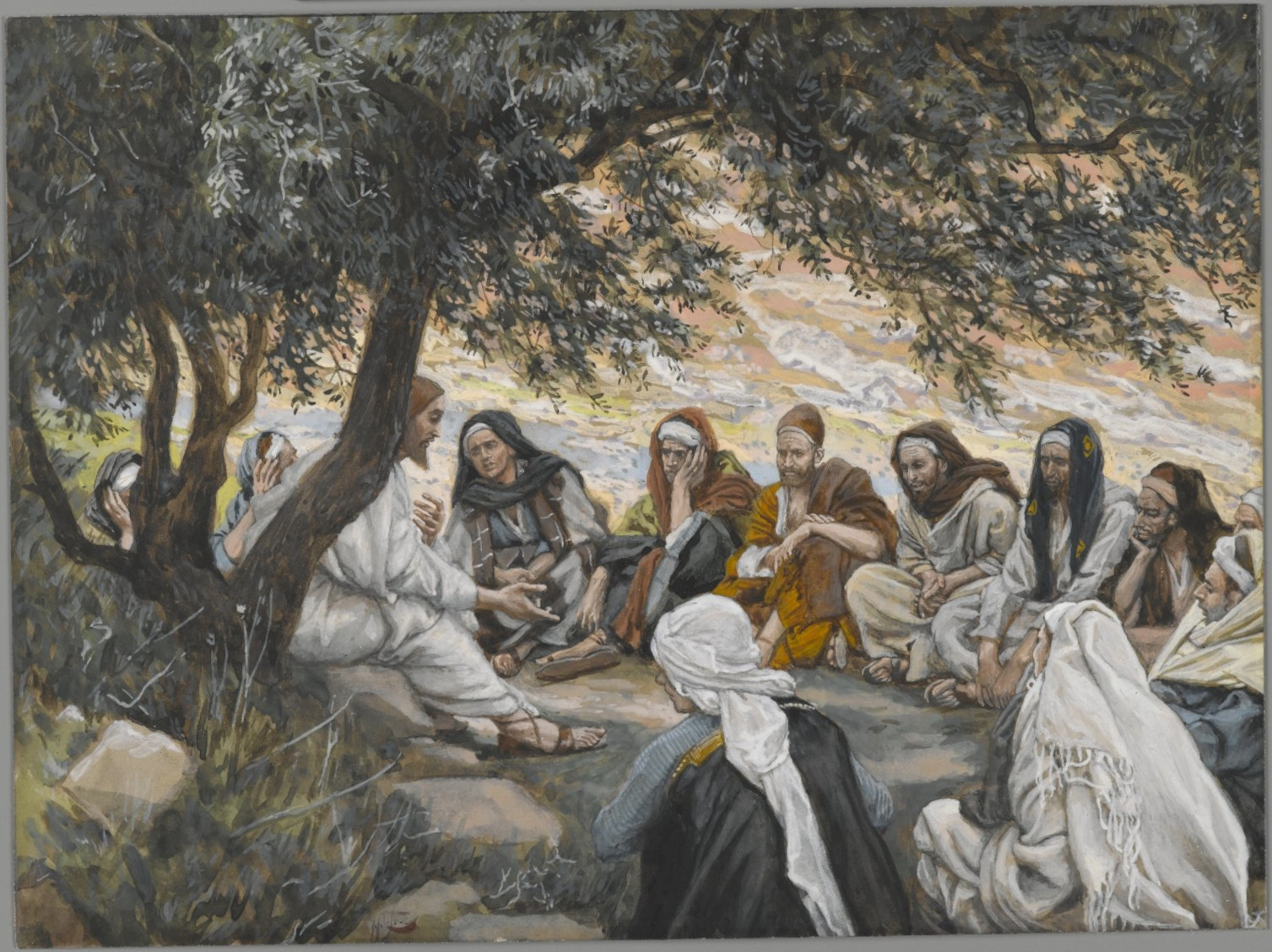
Wanted a picture here to break the endless text...
pretend this is Aldur and his disciples, ok?
From Wikipedia

Belsambar is actually an Angarak, and I wish he had been present in the main series, because that would have been an interesting dynamic to have during this cosmic battle involving the West and the East.  Although we do have Angarak allies throughout the series providing some of that, like Yarblek and Urgit, now that I think of it.  But still... there's definitely more Eddings could have done with this character.

Basically, all we learn is that Belsamar turned on his people after his parents were killed by Grolim knives, and he made his way west, summoned by Aldur.  He was very smart and the others never let him "keep an eye on the world" in the East... they didn't want him going back.  Eventually he becomes depressed after living too long and simply wills himself out of existence.

Belmakor is Melcene and quite practical, just like the Melcenes we meet in The Malloreon.  He's a smart man, has a lot of "very long conversations" with Beldin and came up with the idea for each disciple to have their own tower.  He also likes to call everyone "old boy," which gets annoying extremely quick, especially when Belgarath and Beldin start using it all the time, too.

Anyway, Belmakor ends up killing himself as well.  He had somewhat given up on the world, from what Belgarath tells us.  Perhaps he was too smart and because of it, like Belsambar simply got too bored with living for so long.

Point of interest: Regarding Beltira and Belkira's absence from The Malloreon, it's revealed in this book that they usually stay in the Vale to "guard" it.  There's also the major inconsistency in that they don't finish each others' sentences like they do in The Belgariad.  Eddings used that for the first series, then chucked it aside.  It's somewhat annoying to me.

Gaps of Time

Something that doesn't really get touched on in this book, or put into proper perspective, is the passage of time.  Belgarath is over seven thousand years old.  This book only details perhaps fifty to sixty years of that.  Much of the intervening years in Belgarath's life is glossed over - i.e. it will say something like "I spent a century studying this."

Think about this for a moment.  Many of us won't even live for a century.  For Belgarath, a century - perhaps even a millennium - is worth nothing more to him than a few sentences.  What did he really do all those centuries?  Wouldn't he get bored?  There's only so much you can learn - especially when the world doesn't advance (remember, the dual prophecies basically stagnate progress in this world until the final Choice in The Seeress of Kell).

It makes you wonder.  Did Eddings make the right choice about Belgarath's lifespan?  I can't imagine living for centuries with nothing worthwhile to mention.  Maybe since he knew he would never die, that he didn't rush to do as much as he could... he kind of drifted through life without any worries or sense of urgency.  That's the only way I can look at it.  Otherwise I find it quite unbelievable.

And Belgarath's road goes on and on...
Credit TheFriendlyFiend

Views on Religion

Now you've probably noticed that Belgarath has some strong opinions about religion throughout these books.  He and Beldin constantly remark on the fallacies of other religions and are disdainful of them frequently, especially priests.  Those of Nedra come to mind; he seems to have little patience with Tolnedrans in particular.

What this means, though, is that Belgarath is basically a hypocrite... Belgarath himself is religious, being the first disciple of a god.  Yet others who follow their own religions are sometimes objects of ridicule for him.  I mean, I understand that he has loyalty to his god, but the other gods exist too - and he knows it.  It's not a matter of belief, he is simply of the opinion that his god is best (isn't any religion like that?), and that his personal relationship trumps the organized religious mindset.

While trawling the internet for Eddings-related information I came across a blog post on Lantern Hollow Press that dives into this subject much better than I have.  I agree with the observation that this probably reflects the Eddings's opinion on organized religion.

Hey Girl

For such a long book (much longer than any of the previous volumes), I don't have anything else I want to talk about.  Kind of like how Belgarath ignores centuries of his life.  It's not worth mentioning, just like parts of this book.

Anyway, now that the grumpy father is out of the way, I'll move on to the beautiful daughter.  Next up is the second autobiographical entry in the series, Polgara the Sorceress.  As I mentioned before, I only read that once (when it came out) so I've pretty much forgotten the entire thing.  Let's go see how many centuries of her life is glossed over too, shall we?

Next:

Related Works
Novel - Polgara the Sorceress

Previous:

The Malloreon
Book 5 - The Seeress of Kell
Book 4 - Sorceress of Darshiva
Book 3 - Demon Lord of Karanda
Book 2 - King of the Murgos
Book 1 - Guardians of the West

The Belgariad
Book 5 - Enchanter's End Game
Book 4 - Castle of Wizardry
Book 3 - Magician's Gambit
Book 2 - Queen of Sorcery
Book 1 - Pawn of Prophecy

All maps by Shelly Shapiro

Friday, October 26, 2012

The Belgariad [5] Enchanter's End Game (1984)


The final book of The Belgariad, we bring the two main storylines to conclusion.  Garion is still skulking his way across the Angarak kingdoms towards Cthol Mishrak to confront the god Torak, and Ce'Nedra and company are leading the armies of the West into Mishrak ac Thull to distract the armies of the Murgos and Malloreans.  For the conclusion of a five volume series, you'd think it would be exciting... however, much of the book is filler.

Before you continue:
  • This is part 5 of my The Belgariad and The Malloreon retrospective
  • See this blog post for an overview of the retrospective
  • These blogs are most effective with your own re-read of both series
  • Warning: CONTAINS SPOILERS FOR BOTH SERIES

General Thoughts

This book provides the ending we've all been expecting (Garion killing Torak, we're all saved, happy ending yay), but it takes a while to get there.  Because there's not a lot for Garion to actually do (travel across mostly barren countryside in hiding and then fight Torak), the bulk of the book ends up following Ce'Nedra's storyline (and some of the Western rulers that were left behind to manage the kingdoms while the Kings are at war).

This makes for a book that starts out well, drags a bit in the middle, then ends excitingly.  When you get to the end you're truly sad to see these characters go; they are fun and personable, and their banter has rubbed off on you.  At least it did for me.  They aren't the most complex fantasy characters - but they don't need to be for the reader to care about them.  I think that's Eddings' greatest achievement with the series: as much as the world building seems lacking and plot elements are cliche, you still care about the characters.

Except for a few that are basically pointless.  Like Lelldorin.  He is mentioned in prophecy as the Archer, but ends up being worthless on top of stupid.  What does he do?  Gets hurt in Book 2 and disappears until Book 4, continues to be stupid, then goes with Ce'Nedra to fight like everyone else in Book 5.  Never really liked this character.  A bad version of Legolas from Lord of the Rings.

Lelldorin, being an idiot as usual.  Garion, wondering "Why me?" as usual.
If you are the owner of this picture, let me know so I can credit you, please.

This time I think I'll do the blog backwards: cover, maps and kingdoms first, then discuss different parts of the ending.

The Cover

The cover here is alright, though once again there is a massive spoiler on the cover (Polgara covering a dead Durnik) that those who have been paying mild attention to the prophecies in the series will immediately get.  She doesn't actually cover him like that in the story, but I suppose they were trying to hide his identity.  It would have been nice to see him, though.


We have the map of Mallorea, where the confrontation between Garion and Torak will be, as well as Garion and Belgarath looking travel-worn and weary, wearing the requisite furs from their journey across cold Gar og Nadrak and Mallorea.  Belgarath shouldn't have a long-ass beard, should he?  Pretty sure he's not described with one.

The silhouette here is another mask - this time Torak's, with the burning eye of fire (Sauron, anyone?).  However... the mask is supposed to just be one side of the face (the side that is disfigured).  So Schwinger messed up there.  Tsk tsk.

There are some other alternate covers of the series, but most are blah or not worth posting.  One set is comprised of landscapes that almost look like they were drawn for something else and just reused for The Belgariad because it was close enough.  However, I did find a few good covers for Enchanter's End Game - ones worthy enough to share.

The one on the left is very cool, I especially like the interpretation of Torak.  Even though he's described as handsome, I've always pictured him as dark and scary.  The one on the right is pretty much a copy of other young adult book covers out these days, colorful and catchy like those of Christopher Paolini or Rick Riordan novels.

Gar og Nadrak

This kingdom is home to one of the five Angarak tribes, the Nadraks.  They are by far the most likable of any of the Angaraks, almost akin to the Drasnians in their penchant for trade, money and information.  They have little love for Torak and the Grolims and later make for allies in the fight against the Murgos and Malloreans.


Garion, Belgarath and Silk travel through mining and fur trapping communities, are briefly captured by Mallorean army recruiters, then are captured by a Nadrak trader and taken to... none other than the Nadrak King, Drosta.  The Ruler Streak lives!
The last part of this section deals with the party traveling across Morindland, a tundra-like waste far to the north.  This is actually a really cool section, as the Morind worship and summon demons, and the people are somewhat savage, making for an interesting diversion from the norm and which sets up some background for more demon fun in The Malloreon.

Mishrak ac Thull

And finally, we visit the last kingdom in the western continent.  Home of the Thulls, the idiot tribe of the Angaraks, this country is mostly hills and farmland once you get out of the mountains on the western border.  Thulls are belittled throughout the series, considered stupid and good for nothing but manual labor and potential Grolim sacrifices.  Thullish women are constantly pregnant since Grolims will not sacrifice pregnant women.  This results is a proliferation of lackwit Thulls.


Anyway, Garion does not visit this country.  Ce'Nedra and the armies of the West do.  They end up in a big battle they weren't planning on and Ce'Nedra and company get captured by Malloreans and taken to their Emperor, 'Zakath.  Some minor, 1D characters die in the fighting and we're a little sad.

As for the Ruler Streak... Garion does not meet King Gethell, but Ce'Nedra does.  So it kinda ends here?  Crap.  Although Ce'Nedra is acting in Garion's stead as Overlord of the West.  Still, he does appear on screen, which is the most important thing.

On a side note - why such a "stupid" people are allowed to govern and maintain a large nation never made much sense to me.  You'd think the Angarak rulers would just take it over and use Thulls as slaves throughout Angarak, rather than letting them have their own huge country.  *shrug*

Another side note - what's with the "og" and "ac" in the country names?  Never understood that.  It sounds cool, I guess, but it's like apostrophes sometimes (i.e. the one in 'Zakath, which we learn later actually stands for "Kal")... they look exotic but are generally pointless and a fantasy cliche at this point.

The Portage over the Eastern Escarpment

Before we move on to the last kingdom, I wanted to talk about this separately, as I've always felt it was a little ridiculous.

Part of the Western armies' plan involves portage of the massive Cherek warships across the Eastern Escarpment - a huge cliff that comprises the eastern border of Algaria.  They plan to sail the ships down the River Aldur as far as they can go, then cart them across leagues of grassland, then up and over the escarpment using sophisticated pulley systems created by the Drasnians, then cart them again over leagues of mountainous western Mishrak ac Thull until they get to the River Mardu, whereupon they can sail into the Sea of the East and start having fun sinking Mallorean ships.

Really?  Weren't not talking about canoes here, these are huge ships that have a crew of at least a hundred.

Here's a real portage

It has always struck me as ridiculous and implausible.  These people are not that advanced and practice little science.  There is not a lot of detail on how they do this, it just kind of happens in the background, with some clever suggestions by Durnik.  It's true that the Angaraks would not expect such a bold and daring move - yet all the same, the ease with which it's pulled off has always been one of my little gripes with the realism of the series.  Maybe it's just me.

Mallorea

Ah, boundless Mallorea, as they refer to it sometimes.  Mallorea is much larger than what is shown here, as we'll learn in The Malloreon.  Here we only see the barren northwestern portion, where Torak's dead city of Cthol Mishrak lies.  All the major characters conveniently meet up there, as 'Zakath turns Ce'Nedra and the others over to the Grolims, who bring them across the sea to Zedar the Apostate, guardian of Torak's body, in Cthol Mishrak.


Other than the fight with Torak, the only interesting thing that happens here is Garion, Belgarath and Silk being chased by the Hounds of Torak, Grolims who were transformed into giant hounds and left to guard Cthol Mishrak.

The Ruler Streak kind of came crashing down in the last kingdom, but Ce'Nedra does meet the Emperor of Mallorea, 'Zakath, so... whatever.

Garion vs. Torak

And now we come to it... the final confrontation, what we've been building up to for... a book and a half.  When you read it for the first time, you might be a little disappointed.  Thousands of years of prophecy for a mere sword fight?  It's like when I first saw The Matrix (and Roger Ebert summed up my thoughts on that movie more succinctly) - when Neo learned who he was, it all came down to a little fist fight with Agent Smith.  In the context of the story it just didn't fit for me, but I can understand why they did it.

Same for here... only it's not about a sword fight, which is good.  It's about rejection.  The first is from Polgara, who has to resist him somehow.  She is able to do this because of Durnik's death and the realization of her love for him.  The second is from Garion, who shows him how no one, not even his Angarak people nor his parents (UL and the Universe) love him.  With the realization that he is utterly alone, this allows him to grow sloppy, providing the opening for Garion to kill him with the Orb-flamed sword of the Rivan King.

And so the God who never should have been dies, and the mistake was corrected... or as we find out, not just yet.

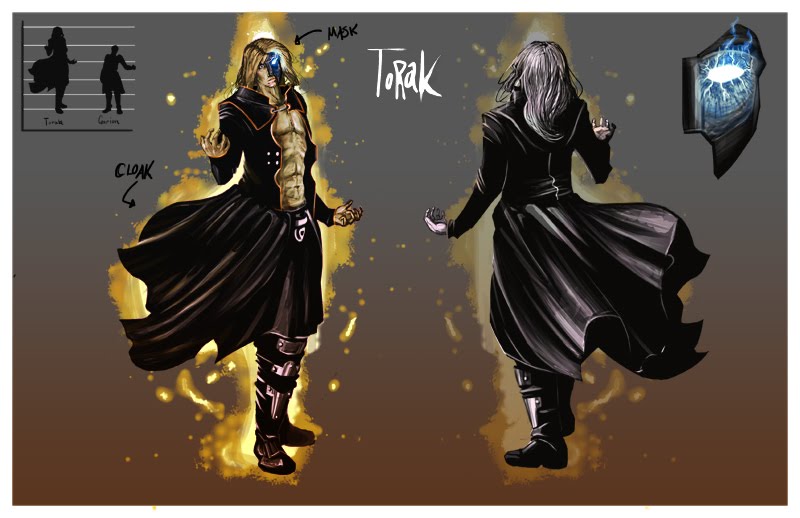
I stumbled across a blog by Zach Alexander with some decent fan art / character designs. Below are Garion and Torak, by far the best ones I've seen (although I think Garion looks like Joffrey in the Game of Thrones HBO series). Check the link here for more (Silk, Barak, Ce'Nedra).


Durnik and Polgara

This is probably my favorite part of the series.  Not because Durnik has to die (we know he's coming back, he's The Man With Two Lives, remember?), but because their love is finally realized.  Durnik has always loved Polgara, but they could never be.  He is a mortal, not a sorcerer - the union could not last.  And Polgara has never had a normal life or love, and she's spent centuries sacrificing herself to ensure Garion came into being.  So to finally see them both get what they want - it's heartwarming.

And even though you know Durnik will be back, the anguish Polgara shows when he dies is very touching.  It's a completely different Polgara than we've seen.  We already know about Belgarath's grief over his wife, Poledra, and he felt more human than Polgara throughout most of the series.  She doesn't get too emotionally attached to people outside the sorcerer's circle since she knows she will outlive them.

Then later, when we discover that Durnik was given the Will and the Word after his resurrection rather than Polgara having hers removed... very nice moment.  I immediately wondered if he was going to be called Beldurnik, like the other "good" male sorcerers.  As we find out in The Malloreon, that doesn't happen.  Which is good, because I think it sounds awkward.

Also found some fan art of Durnik and Polgara by an artist named Oboe.  There are some others there too; Ce'Nedra, Barak and Mandorallen.  Durnik is so plain and unassuming you probably wouldn't even know it was him unless I said so... the portrait could be of any normal person.  Polgara, of course, is easily recognizable with her distinctive white lock of hair.


What's Next?

I'm sure Eddings did not have The Malloreon planned when he wrote The Belgariad, based on the way some characters act and what they say (referring to Garion vs. Torak as the final confrontation). The great success of the first series surely prompted Lester Del Rey to ask Eddings for a sequel of some sort.

So... we're not done just yet with Garion and Friends.  Another meeting of the Child of Light and Child of Dark is in the works.  This time to completely fix the mistake that was the birth of Torak.

In the next series, The Malloreon, our heroes travel the breadth and width of the eastern continent, Mallorea, giving us a whirlwind tour of the rest of Eddings' world.  There will be more maps and more peoples to discuss, many of them godless, and many new friends and allies.  I actually like the sequel series better than The Belgariad, which to me is now just an extended prologue, a setup for the much better sequel.  The Malloreon is more adult in focus and more entertaining in general, in my opinion, since Garion is an adult now - much the way the second half of the Harry Potter series is so much better than the first half because Harry is older and has more serious adventures.

Next:

The Malloreon
Book 1 - Guardians of the West

Previous:

The Belgariad
Book 4 - Castle of Wizardry
Book 3 - Magician's Gambit
Book 2 - Queen of Sorcery
Book 1 - Pawn of Prophecy

All maps by Shelly Shapiro

Friday, October 12, 2012

The Belgariad [4] Castle of Wizardry


I like to call this book the "Book of Alorn."  That's because it's completely centered on the Kingdoms of Aloria and it's current purpose in the world (protection of the Orb and the West).  We visit three of the four Alorn Kingdoms, discover who Garion really is (as if we didn't already know) and learn that he has to undertake a new, more dangerous quest.  The story also splits into two storylines, providing more of an epic feel.

Before you continue:
  • This is part 4 of my The Belgariad and The Malloreon retrospective
  • See this blog post for an overview of the retrospective
  • These blogs are most effective with your own re-read of both series
  • Warning: CONTAINS SPOILERS FOR BOTH SERIES

General Thoughts

I like this book the best out of The Belgariad, for a few reasons.  One is the recurring themes of home, belonging and finding your purpose, which I'll talk about more later.  Many characters suddenly realize their place / purpose in the world, and that's always something that I've gravitated towards in books and film.

The other reason is that the story expands, and it's not just told from Garion's viewpoint anymore, but from both Garion and Ce'Nedra's viewpoint.  The last section of the book is entirely Ce'Nedra's, and it's a welcome change of pace and provides a dimension to the story that previous volumes were lacking.  While there's nothing wrong with seeing things through Garion's eyes, his "why me?" attitude and innocence about the world does get old after a while.  Ce'Nedra, on the other hand, loves to be the center of attention.

In terms of the title - Castle of Wizardry - I feel it's the most poorly-named of all of the books.  I guess it's refering to the castle in Riva?  Except that Garion is not a wizard.  He's a sorcerer.  And there's nothing wizardly about the castle.  It's never made any sense to me and is one of those generic, throwaway fantasy titles that doesn't really mean anything.  (Like Knife of Dreams from The Wheel of Time.)  Surely Eddings could have come up with a more apt name, though I know the titles are chess-themed, since it's supposed to be part of this cosmic chess match between the two Prophecies.

What sucks is now when you search for "castle of wizardry" images in Google, after a page or so you mostly get Hogwarts references.

The new Castle of Wizardry: Hogwarts.
Credit: Universal Orlando Resort

Prologue

As I mention in the blog for Magician's Gambit, Eddings makes good use of each prologue to impart critical history that the reader will need for the coming volume.  This time we have an account of the murder of the Rivan King by Nyissa.  This is important because obviously, taking Garion and the Orb to Riva is going to reinstate the line of Rivan Kings long thought dead.

The whole hiding of the Rivan King's family is addressed in much greater detail in the Polgara the Sorceress memoir.  Polgara is reluctantly forced to keep watch over the Rivan line, moving them around for hundreds of years.  Only one male child is born in each generation (prophecy, I guess), and they lived and died in obscurity, each knowing that they were the Rivan King, but unable to do anything about it.  That would kind of suck, if you ask me... but at least they knew their purpose in life was to keep the line going, that in the end they would make a difference.

Family

Continuing on that, one of the main focuses of this volume is family.  When Garion discovers that Adara, a girl he meets in Algaria, is his cousin, he no longer feels orphaned or so alone in the world.  A relative of his own generation is very important to him, compared to one like Polgara or Belgarath - both of whom he is technically related to, though generations upon generations removed.

This theme continues with some of the other characters.  Barak and Merel reconcile due to the birth of his first son.  They are finally the family that Barak wanted.  Relg and Taiba frequently share each other's company, both finding something in a human bond that they never thought they would find.

Finding Your Place

Along with the theme of family, there's the theme of "finding your place."  In other words, what is your purpose?  Everyone probably asks themselves at some point, "Why am I here? What is my purpose in life?" Knowing that can be very fulfilling for some people.

And even though we knew it, Garion didn't, and when he finally takes the Orb in Riva and is crowned king, he learns what his place in the world is.  He finds home - Riva - and a new family in the Rivan people.  This was what he was born for.

Of course, learning this comes with the price of having to go fight the god Torak, which Garion decides to undertake in secrecy.  But his departure provides Ce'Nedra with a new purpose as the incumbent Rivan Queen.  She decides to help gather the forces of the West and be their figurehead, so they can distract the Angaraks while Garion, Belgarath and Silk sneak into Mallorea to meet Torak.

The Cover

As much as I like this volume, I'm not a fan of the cover.  Even though it's the same arist, Laurence Schwinger, Garion looks kind of weird here.  What he's doing is also a massive spoiler, but of course you knew who he was from the beginning (and if you didn't, there's no hope for you, sorry).


Ce'Nedra looks fine, and it's nice that Schwinger paid attention to the details once again, like the armor with the breast forms (which makes for a somewhat amusing exchange between Ce'Nedra and an armorer).  The map in the background shows Riva, the Isle of the Winds (of course), and the silhouette this time is a crown.  Gee, I wonder what that means?

Gibberish Prophecies

Throughout the series they frequently mention how the prophecies they follow are "gibberish" and make no sense, and how Belgarath and the others have looked at them forward, backward and sideways over the millenia, yet still have no clue what some of them mean.  Some line of prophecy is quoted in the book and some other character is like, "Phaw, absolute gibberish, that doesn't mean anything."

Really?  In The Belgariad - where nothing's really a secret to the reader - none of the prophecy reads as gibberish to me.  My reaction is, "seriously, you can't understand what it means?"  I always find it amusing.  Take this exchange, near the end of Castle of Wizardry, when Polgara is telling Ce'Nedra what the prophecy says about her, after she's been speaking to crowds and gathering armies for the West (chapter 26, pg. 343 of the paperback version):
Polgara ran her eyes down the crackling parchment.  "Here is it," she said, lifting the scroll into the candlelight.  "'And the voice of the Bride of Light shall be heard in the kingdoms of the world,'" she read, "'and her words shall be as fire in dry grass, that the multitudes shall rise up to go forth under the blaze of her banner.'"
"That doesn't mean anything at all, Lady Polgara," Ce'Nedra objected.  "It's absolute gibberish."
I don't know about you, but that's not "absolute gibberish," and it makes the characters sound dumb when they say that - especially when someone like Belgarath says it.  Gibberish should have no actual meaning to it, whereas here it's perfectly obvious what it means, even if you haven't even read this book.  Whether you know what/who the Bride of Light is is irrelevant to understanding.  A true gibberish version of the prophecy above would be something like this:

"And the Light Bride hearing far the world voice, fire words over grass, a multitude banner rise forth from blazing kingdoms."
Now that would be gibberish to the reader.  Usually gibberish is reserved for bad poetry.  Which I suppose prophecy kind of is.  But Eddings's prophecies are kind of weak, if you ask me.

Algaria

It's somewhat interesting that a book with themes of family and finding your place take place in countries that are very bleak, empty and desolate.  Algaria is the first of the three we visit in Castle of Wizardry.

Algaria is where our heroes escape to after recovering the Orb in Cthol Murgos.  It's a huge country, mostly grassland, and the Algars are nomadic. The Vale of Aldur (from the last book, Magician's Gambit) comprises its southern tip.  They have only two permanent cities: the Stronghold, a huge stone fortress near the Vale; and Aldurford, up by the Fens (which we visit later).


We don't do much in Algaria.  The group reunites with Hettar, our Horse Lord,  meet up with King Cho-Hag and travel to the Stronghold.  There Garion meets his cousin, Adara, the first "real" family he has found.  He also meets King Cho-Hag, keeping the Ruler Streak going - but then, he already met all the Alorn Kings in Pawn of Prophecy.  Still, it's good to see them in their own country.

Riva

Riva only came about as a nation because the Alorns needed somewhere to keep the Orb safe.  It consists of a single fortress city on the Isle of the Winds, a bleak, forboding place in the western ocean, mostly mountainous with some pasturelands.  We don't go any place other than the city in this book, though, so it doesn't really matter.

Lots o' water, not much land.

Garion has suddenly found himself the ruler of this small country, now that he has come into his inheritance.  He discusses war with the Alorn and Sendarian kings, learns that he has little privacy anymore and that he is to marry Princess Ce'Nedra - something she is pissed about because he will outrank her.  Lots of drama, not a lot of action - until Garion learns what he must do: fight the God Torak.

Since Garion himself is the ruler of this country, the Ruler Streak lives!  If you don't think that counts, well... he meets Brand, the Rivan Warder, a position that has ruled in Riva ever since the Nyissans killed the Rivan King and Polgara hid the heir.  So there.

Drasnia

Like Algaria, our stay in Drasnia is rather brief and forgetful.  Garion, Belgarath and Silk have snuck away from Riva and are cutting through Drasnia on the way to Mallorea.  It's a very short section (60 pages) and there's not really much to see or do here.  Now we understand why Silk hates his homeland so much.  There are marshes and moors and a whole lot of nothing in Drasnia.  The map only shows one city, Boktor.  Yawn.

We do spend some time in the marshes / fens in the southwest, where our small party is stuck in a swamp and need "help" to get out.  Help = witch woman Vordai who will ensure they stay lost until they give her creature friends (fenlings, I guess they're kind of like squat sea lions or something?) the ability to speak human words.  Nevermind that Belgarath and Garion are sorcerers and can just open a path and leave rather than waste time.  Garion even mentions this to Belgarath, but he said they had to - prophecy required it of them.

Booooring.

That's about it.  They are briefly stopped in the capital, but tell the Queen there to leave them alone (Polgara has been trying to bring them back to Riva after they snuck off) and eventually continue on.  I'm keeping the Ruler Streak alive here because Garion has met King Rhodar a couple of times now, and he does see the Queen while in Boktor - who is ruling in his stead.  So it counts, I don't care what you say.

You do learn a little more about Silk's past - how he's got a crush on his aunt, the Queen, and about his mother - but it's not that important to Garion's story.  He is the trickster / comic relief in this story.  His past becomes more important in the next series, The Malloreon, but here it's just nice-to-know info.

Not my favorite version of Silk, but one of
the better ones out there.

The Rivan Queen

The last section of the book deals with what happens to Ce'Nedra after Garion sneaks off to deal with Torak.  There's no special map or need to check the Ruler Streak, since they visit a number of countries here.  The West needs to draw the attention of the Angaraks from Garion, so they are mobilizing troops and planning for war.  Little Ce'Nedra decides she's going to be the figurehead of this army, wanting to live up to her new title, The Rivan Queen.

This is a welcome change of pace.  Ce'Nedra is a lot different than Garion; she's more willful, more manipulative.  At first she's not sure she can pull it off - doing the speeches, getting people to follow her - but she manages it quite well, even stealing the Tolnedran Legions from her father, all the while feeling guilty for leading so many to their deaths.  For many will die; though it's all supposed to be a diversion, war is inevitable.  Blood will flow.

Next:

Book 5 - Enchanter's End Game

Previous:

Book 3 - Magician's Gambit
Book 2 - Queen of Sorcery
Book 1 - Pawn of Prophecy

Hey guess what?  This was my 100th published post!  Yay me.

All maps by Shelly Shapiro