Showing posts with label the malloreon. Show all posts

Sunday, November 29, 2015

Eddings [Reference] The Rivan Codex (1998)


Finally, the last volume in the Belgariad / Malloreon saga (I wish there were an overarching name for the entire thing, but alas).  This is a somewhat unique book, as it's a mix of reference material and essays on the world and writing process.  It would be akin to The World of Robert Jordan's The Wheel of Time if Jordan had also explained why he did things the way he did.

Before you continue:
  • This is part 13 of my The Belgariad and The Malloreon retrospective
  • See this blog post for an overview of the retrospective
  • These blogs are most effective with your own re-read of both series
  • Warning: CONTAINS SPOILERS FOR BOTH SERIES

What I Already Knew

Reviews of this book were generally positive, and I was anxious to read it... but in the end I skimmed through most of it, as chunks of it were material I'd already read in the main narrative of The Belgariad and The Malloreon.  Like the "Book of Alorn" that Belgarath recites way back in Pawn of Prophecy - it's almost lifted word by word from this.  Most of the prologues throughout the two series come from these notes.  Which makes sense, considering that much of this material was background made beforehand, to give them a foundation from which to write the story.

There are sections with holy texts for each race, and then sections on the history of each race and country.  These take up most of the book, and I skipped most of it.  Seriously, there are dozens of pages dedicated to the entire succession of Tolnedran Emperors (yes, every single one) - something that I was not the least bit interested in.

The Malloreon Gospels are in here, which I did read, as well as a section at the end from the personal journal of King Anheg, which appears to be set up for the storyline of The Malloreon, as it focuses on the events leading up to it and into the first book, Guardians of the West.

So I probably only read about 1/4 of the book.  All of the racial minutiae I didn't care about.  But it certainly was an interesting look into the amount of preparation that went into creating this series.  As a writer myself, it's always helpful to see how successful authors go about creating and writing in a world.  Although in the end there's no right or wrong way to do it... it's all up to the individual author and how they work best.  I personally have never gone into that much detail regarding a race or people when plotting something.  It would bore me to tears.  I want to get on with the writing!

What I Didn't Know

I had no idea Eddings had such a substantial background in medieval literature.  This is covered in the Introduction of the book, which is the most interesting part of it, though most of it reads like a condescending lecture (more on that below).

Since much of his writing was done pre-Internet, there aren't the typical fansites that crop up while a series is being written, with the inevitable wealth of information you generally can get on a writer in the current Internet age.  So there was very little I knew about his personal life, even now.  He says in the Introduction that he is very private, and that it's going to stay that way.  Mission accomplished, I suppose.

Anyway, Eddings spends a lot of time in the Introduction explaining the roots of contemporary fantasy and how you should respect medieval literature above all (which explains why he was so good at writing "High Style" dialogue - thee and thou, etc).  He also originally intended to do just a trilogy, but Lester Del Rey (the publisher) said it had to be five books due to the length limitations bookstores would impose on them (shelf space = premium).

Eddings then goes on to say that "you're not qualified to write epic fantasy until you've been exposed to medieval romance," which I think most people (including myself) would disagree with.  Maybe 40 years ago, when there weren't many epic fantasies on the shelves, this would be true, but today... not so much, unless you want to be formulaic and boring.  It doesn't hurt to know (I took a medieval literature course in college for my own amusement), and it's certainly influenced modern works such as George R.R. Martin's A Song of Ice and Fire and Robert Jordan's The Wheel of Time, but necessary?  You can get along without it.

One thing I do agree with, though, and what most writers will tell you, is to write every day, as often as you can, and to toss your early work.  I wrote dozens of short stories and four novels before I decided I had one good enough to publish (Bonebearer).

Confirmations!

Most of my theories or thoughts from previous blogs on the series were confirmed here.  I'm only going to discuss the major ones that have always bothered me.

Anachronistic Cultures
Eddings confirms that he deliberately drew from different cultures from across the globe, though some differ from my guesses.  Here's what he said they correspond to:

Sendars = rural Englishmen
Arends = Norman French
Tolnedrans = Romans
Chereks = Vikings
Algars = Cossacks
Ulgos = Jews
Angaraks = Hunnish/Mongolian/Muslim/Visigoth

None of the rest had a specific analog in our world.  I got a few of them right, though, and of course the anachronism is intact, as not all of those cultures/races are from the same time period in our history.

Malloreon Made Up Later
Eddings also confirms that much of The Malloreon continent and backstory was not created until after The Belgariad was done and they had to come up with another story.  Which is what it totally feels like, especially with the contradictions that come up between the two series.

Ideally, you don't need to detail all of the backstory and history in order to write a series.  Sometimes you don't need it until you have to make it up as part of the narrative (which I have done).  However - you should always try to make it fit into what you have so far.  Avoid contradictions and inconsistencies like the plague, as there are plenty of sharp-eyed readers who will gleefully point them out.

The Prophecies Don't Exist
That's right, he never actually wrote out the entire Mrin or Darine Codex - the impetus for much of the story.  As he says, they are a literary device and nothing more, used to occasionally set our characters on a new course of action.  He simply came up with lines as needed.  That's all.

Retrospective Conclusion

So there you have it.  I'm not going to create a separate blog post to "conclude" this Retrospective, like I did for The Wheel of Time, with things like favorite volumes, characters or scenes.  First, because I don't feel it needs one, and second, I want to be done with this Retrospective.  You'll note that I didn't even talk about the cover this time!  Lucky you.

Instead, I'll just wrap things up with the below:

The Belgariad and The Malloreon are not paragons of modern fantasy, but they will always hold a special place in my heart, as they are the first fantasy series I ever read.  I notice so many holes and issues with it now, but they still remain fun and nostalgic for me.  I would recommend them for young readers as a perfect entry into the world of fantasy.  Are you ready?

I'm thankful Eddings stopped doing "honest work" to write these two series.  They had a great effect on my life and my own writing.  Many people may scoff at it these days, but I'll never get rid of my copies, and I'll continue to read it every few years, no matter how old I get.

Online References

One last thing.  Throughout this Retrospective, I've referenced a few Eddings-centric websites.  There aren't many, but if you want to explore sites that actually still exist, here you go:

The David Eddings Wikia
Eddings Chronicles
Guardians of the West
alt.fan.eddings
The Eddings Trivia Page

Note that most of the links on the latter two sites are dead.  One is even linked to Geocities!  The content is somewhat outdated as well.  The Wikia site is pretty much the only currently maintained site on Eddings and all his (and Leigh's) works.

Previous:

Related Works
Novel - Polgara the Sorcerer
Novel - Belgarath the Sorcerer

The Malloreon
Book 5 - The Seeress of Kell
Book 4 - Sorceress of Darshiva
Book 3 - Demon Lord of Karanda
Book 2 - King of the Murgos
Book 1 - Guardians of the West

The Belgariad
Book 5 - Enchanter's End Game
Book 4 - Castle of Wizardry
Book 3 - Magician's Gambit
Book 2 - Queen of Sorcery
Book 1 - Pawn of Prophecy

Thursday, April 16, 2015

Eddings [Novel] Polgara the Sorceress (1997)


Eddings followed up his first fake autobiography, Belgarath the Sorcerer, with a second one, told by Belgarath's daughter, Polgara.  Just like her father's, it clocks in at over 700 pages and drags in places.  Sometimes there's no need to retell the same events from a different perspective.  Especially when they contradict things yet again.

I honestly don't remember when I first read this book... but I do remember that I had a Science Fiction Book Club version (you know, the smaller hardbacks), so it was probably around 1998, after I left college and got a job.  I donated the book 4 years ago when I moved across the country, so I had to go find another copy for this re-read.  Sadly, it's not in ebook format yet.  The Rivan Codex, which is the final book I'll be doing in this retrospective, is the only one in ebook format for some reason.  Del Rey's probably too lazy to OCR / scan in the original text.

Since many of the things I talked about in the previous blog for Belgarath the Sorcerer apply to this book, I'm going to instead talk about each major section and my thoughts.  Overall this book is okay... it's on par with Belgarath, but neither of the autobiographies are as good as either main series.  It's really only worth reading if you absolutely love the Belgariad and Malloreon, and can't get enough.

Before you continue:
  • This is part 12 of my The Belgariad and The Malloreon retrospective
  • See this blog post for an overview of the retrospective
  • These blogs are most effective with your own re-read of both series
  • Warning: CONTAINS SPOILERS FOR BOTH SERIES

The Cover

First, the cover.  As usual, nothing special.  Polgara in front of the Tree in the Vale with an owl on her wrist, presumably Poledra, her mother.  


There are different versions, of course - and a decent amount of fan art for Polgara out there, since she's a very distinctive character - but this one below is probably my favorite.


You can find more covers on the David Eddings Wiki.

Part 1: Beldaran

This first section covers Polgara's childhood and her bond with Beldaran, her twin sister.  It always seemed weird that Polgara was a tomboy growing up, though compared to how long she's lived (4,000 years) it's only seconds in the grand scheme of things.

A few major things happen here.  Polgara learns that she has the power of the Will and the Word, while Beldaran doesn't.  She learns that her mother, Poledra, didn't die giving birth to her, and that she had to hide as part of the Purpose they are all following (the eventual Godslayer and new God of Angarak that will fix the Mistake).  Poledra, it seems, has been with Polgara all this time.  I don't believe Polgara mentions that she had always been guiding her in the Malloreon, but I could be wrong.  It feels like something Eddings threw in later.  It works better than some of the other inconsistencies, though.

The last thing of importance is Polgara essentially becoming the guardian of the Rivan line.  She hears the Voice of Prophecy as well... it's the same inconsistency that popped up in the Belgarath book.

Part 2: Father

In this section, Polgara becomes closer to her father, learns what it means to be part of this elite group of Disciples, and comes to terms with her own abilities.  You get a better insight into what went on at Riva in the early days, for she spends a lot of time there, learning things like healing, herbs, surgery, etc.   She and Belgarath visit the Mrin and Darine prophets, whose ramblings are recorded down as the Mrin and Darine Codices that become important later.  Also, she kind of falls in love for the first time, with a Rivan named Kamion, who becomes the first Rivan Warder.

Now, they call him Brand in this one, but I could have sworn back in the Belgariad and Malloreon, that the title of Brand only came into being after the assassination of King Gorek, when the Rivan line went into hiding.  But I could be wrong.

Part 3: Vo Wacune

Honestly, this section is pretty boring.  It's part of why it took me so long to do this retrospective.  I simply got bogged down in it and frequently read other things.

Polgara is tasked with going to Arendia and keeping the Angaraks from meddling in their affairs and potentially pushing the West into war, much like I had to push myself through this section.  It's quite dull and could have been done in maybe two chapters.

I guess Eddings was trying to establish why Polgara loved Vo Wacune so much.  It does explain how she became the Duchess of Erat and all that, which was nice to see.

Part 4: Ontrose

Ontrose is the next person that Polgara falls in love with.  She actually wants to marry him.  Belgarath says this is not possible, of course, because Ontrose will grow old and die, while Polgara won't.  This section mostly continues the storylines in the previous section, so it's just about as boring.

There's also an offhand remark in this section about how Polgara hadn't seen Belgarath in a few centuries, and you have to stop and think.  What is it like to not see someone for two centuries?  What do you say when you finally meet up?  According to Polgara, this is what you say:

"Well, Old Wolf, what have you been up to?" 
"Not too much, Pol."

Part 5: Geran

Vo Wacune falls at the beginning of this section.  Ontrose eventually dies in battle.  Finally done with Arendia.

See, I can flippantly disregard decades with a few sentences too!

The book picks up soon after.  The Rivan King, Gorek, and his family is assassinated by the Nyissans - all except their youngest son, Geran, one of many in the line named Geran.  Polgara and Belgarath rescue him and she becomes the guardian of the line, protecting them until the Godslayer comes.  They spend time at her Erat estate and then begins the long wait... moving around to various places in Sendaria and the Alorn Kingdoms.  Our old pal Chamdar (Asharak, whom Garion killed in Queen of Sorcery) pops up from time to time.

I've always wondered, why not just hide in Cherek from the start?  It's not easy for Angaraks to go to any of the Alorn Kingdoms; the line would be pretty safe.  Polgara does move them to Cherek and Drasnia and Algaria later, but I've never understood that.  I know they had to move because Polgara never ages and people would wonder... but still.

Also, working in the realm of prophecy... why should they be worried?  Countless times do the Angaraks try to end the line or this or that, and it never works.  Why would the prophecies be created if they weren't going to be fulfilled?  Prophecy can be a mess sometimes.

Part 6: Vo Mimbre

Pretty obvious what this section covers.  We don't learn a whole lot more than we knew before.  At this point you should know the story of Vo Mimbre.  Especially since there will be a test later.

We actually get to see Torak in this section, though, which is cool, since you rarely get to see him at all in the series.

Part 7: Annath

This last section deals strictly with the Rivan line and the birth of Garion.  Annath is the town he was born in, where Polgara moved his grandfather, a stonecutter.  It's a good section and probably the best of the book.  Despite knowing how it ends, it's nice to see it finally fit together.

There is a really good part at the beginning of this, though.  It's about Gelane, one of the Rivan line.  He survived Vo Mimbre in the Algarian Stronghold and he knew who he was from an early age.  He never seemed content to be just a normal person and later gets involved with the Bear Cult.

It's a welcome change from the constant descendants that simply accept everything and lead normal lives.  As I was reading, I wondered why weren't more upset that they had to hide?  What if one of them did not want what Polgara wanted, i.e. to take up a simple trade and live in obscurity.  Gelane is the closest we get to that, but I wanted more.  How would she have dealt with someone who was apathetic and totally resistant to what she wanted?  Would have been a cool dynamic.

Other Notes

Just a few things I want to comment on before wrapping this up.

At a point in the Vo Mimbre section, I believe, Poledra tells Polgara that the Events and Meetings all come down to simple choices.  I'm pretty sure that in the Malloreon, they didn't know this until they visit the Seers at Kell.  I remember Belgarath or Beldin remarking that every Meeting between the Child of Light and Child of Dark probably had a Seer lurking around somewhere making a Choice.  But I could be wrong.

Towards the end of the book, Alara is devastated by her son Darral's death (Darral is Garion's real grandfather) and goes mad.  Ildera (Garion's mother) asks why Polgara can't just fix it with, you know... waves hand about.  Polgara says the mind is complicated and it doesn't work that way.  And yet... earlier in this book she's erasing memories from people for various reasons.  Poledra actually teaches her how to do this.  Um, okay.

There's more confirmation about the concept that everything is stuck in a loop until the Mistake is corrected.  Polgara comments on this in regards to Brand.  And that probably had something to do with the "ordinariness" of the males in the Rivan line that she protected.  Just keep chugging along, status quo, until it's fixed.

A final note about the line of Rivan Kings.  It would be strange to live for so long and see the line come and go.  Protecting them, keeping it secret, waiting for the Godslayer to come.  Eddings could have made this more tragic than it turned out to be.  Polgara often left to do other tasks, so she had breaks here and there, and she rarely seemed to get close to anyone after Ontrose.  She does get upset on occasion, but I would have liked to have seen her get really close to a few and be very devastated when they died, have her question why she has to go through this, etc... there's not much of that.  It's something I feel is lacking in the book.

The Final Entry

Alright.  It seems it will have taken me about 3 years to finish this Eddings retrospectives.  That's too long.  But good things come to those who wait, right?

The final entry I will blog about is The Rivan Codex.  It's a mix of non-fiction and background notes for the entire series.  I've never read it before, so am looking forward to it.  Reviews seem generally positive.

Wish me luck!

Next:

Reference - The Rivan Codex

Previous:

Related Works
Novel - Belgarath the Sorcerer

The Malloreon
Book 5 - The Seeress of Kell
Book 4 - Sorceress of Darshiva
Book 3 - Demon Lord of Karanda
Book 2 - King of the Murgos
Book 1 - Guardians of the West

The Belgariad
Book 5 - Enchanter's End Game
Book 4 - Castle of Wizardry
Book 3 - Magician's Gambit
Book 2 - Queen of Sorcery
Book 1 - Pawn of Prophecy

Friday, March 14, 2014

Eddings [Novel] Belgarath the Sorcerer (1995)


After Eddings finished The Malloreon, he took a break and did The Tamuli, a trilogy that is the sequel series to The Elenium (which he wrote at the same time as The Malloreon).  Those two trilogies are fairly decent, though they copy many of the same elements from The Belgariad and The Malloreon... so if you like these books and are looking for something similar to read, check them out.

Anyway, after that, he returned to the world of Garion and Co. with Belgarath the Sorcerer, an autobiography by Belgarath himself.  I didn't get this book until it came out in paperback (too busy reading other things, like The Wheel of Time), and I was excited to read it.

This is a book that you probably won't enjoy unless you've read both The Belgariad and The Malloreon and liked them.  There's a lot of history in here and it's quite long (over 700 pages), and it does drag in places, particularly around events we're already familiar with.

Before you continue:
  • This is part 11 of my The Belgariad and The Malloreon retrospective
  • See this blog post for an overview of the retrospective
  • These blogs are most effective with your own re-read of both series
  • Warning: CONTAINS SPOILERS FOR BOTH SERIES

The Cover

The covers for this novel isn't all that much different than the main series ones.  Characters in the forefront, some creature / silhouette in the background, map behind.  This one is okay, and I do like the depiction of Belgarath here.  I've always pictured someone like Sean Connery as Belgarath, with a short beard (not the long ass one he had on the cover of Enchanter's End Game).  Donald Sutherland is another name I've seen bandied around... he'd be good too.


On this cover we have Polgara and Belgarath on the left, with Beldaran and Riva Iron-Grip on the right.  It works, though not all that exciting.  I do like the glowing Orb on the sword on the right, though.

The more I do these blogs, the more alternate covers I discover... you can see a bunch of them on the David Eddings Wikia.  Some are pretty cool, while others are bizarre.  Like the one with demon wings... what the hell is that all about?  I'd post it here but I couldn't access the picture separately... so check the link!

A fan cover that I really think is cool is this one:

Belgarath the Sorcerer by Narxinba222 on deviantART

It wouldn't let me direct link to this either, so do check it out!

Inconsistencies

Something this book does a lot is contradict the Garion-centric series.  There are already plenty of plotholes, but this book takes it to another level.  The explanation, of course, is that Belgarath is telling events as he remembers them (and he may be embellishing them... he's a storyteller, remember?), whereas the previous series were told by narrators or historians who may have gotten it wrong.

It's a valid way to explain inconsistencies... after the fact.  To most readers I think it's clear that Eddings didn't plan some elements of the story properly.   He contradicted himself in The Malloreon, then explained it away using this device in Belgarath.  That, coupled with the use of Prophecy as an interfering entity, can explain pretty much anything that seems wrong.  Which almost takes the fun out of it if you're a superfan, because then what can you trust?

Anyway, I may point out noteworthy inconsistencies as we go along, but more comprehensive lists can be found on the following pages:

alt.fan.eddings FAQ
The Big List of Eddings Inconsistencies
Wikipedia - Belgarath the Sorcerer

First Person Narratives

Before I get too much into the content, there's something that bothers me a bit with many first person narratives: it's too clean.  A narrative like this is basically Belgarath dictating his life.  Very similar to what Anne Rice does in many of her novels, though in those she'll actually have the person speaking for a good chunk of the novel (constant dialogue, like in Blackwood Farm)... but it's still too clean.

If someone were sitting there and reciting his or her life story - as is the way this book reads - the wording would be different.  It wouldn't be perfect English and they wouldn't remember exactly what people were saying, reciting whole conversations as if from memory.  It's similar to taking an interview from someone, editing out the boring parts and removing the "uhs" or "ums" or "you know what I'm sayings" from their everyday speech so that it's more readable and to the point.

For some reason that bothers me a little.  I think in one of my future novels I'm going to leave the dictated story "unedited" just to try it out.  It would feel more realistic to me.  Eddings actually does do a good job with this novel - it feels like Belgarath's talking to you in many places - but it's still in the back of my mind when I read it.  Maybe it's just me.  If so, carry on.

The Prehistoric World

Belgarath's story begins in the world before the Gods left, when Torak was whole, the Orb didn't exist and the world had yet to be cracked.  Instead of two continents separated by a sea, there was one giant continent where all various races were spread out.  This is deemed the Prehistoric World in the book's lone new map.


Belgarath started as a young man named Garath, who grew up in a village named Gara.  Much of this early story is dull... he's a thief and leaves the village, wanders about and lives with other groups of people, until eventually stumbling across the god Aldur.  He doesn't know the man is a god, and seemingly becomes his disciple by accident (though of course it's not).

Point of interest: Belgarath talks a lot about the "godless" races (remember, Aldur did not choose a people), which basically became the Ulgos, Karands, Dals and Melcenes... the Malloreon ones are never mentioned in the first series, The Belgariad, yet clearly he knew all about them then.  I mean, his fellow disciple, Belmakor, was Melcene!  Same with the cities in Cthol Murgos.  They all knew about this stuff.  Not exactly an inconsistency, I suppose... more of a glaring omission.

We are introduced to the other disciples over time, including two that we've never seen before: Belmakor and Belsambar.  We'll talk about them more later.  Zedar's fall is detailed - nothing really surprising here, though Belgarath remarks many times on the fact that he didn't notice the blatant signs of his betrayal (the Prophecy distracts him, I suppose) - the Orb is stolen by Torak, he cracks the world, yadda yadda...

Point of interest: Eddings throws in a nice explanation of how all the disparate races ended up close together on the western continent.  After the cracking of the world, they fled to the west, congregating together on the western coast, when in the Prehistoric World they used to be more spread out.  It's a nice explanation, though it still contradicts Eddings' own comments on that.

There's also the glaring inconsistency of the Voice of Prophecy speaking to Belgarath.  He acts surprised in The Belgariad when he learns that it speaks to Garion, but here he talks to it quite a bit.

The Pre-Garion World

The next few sections of the book deal with the period of time between the cracking of the world and the birth of Garion, hitting major events like the re-theft of the Orb by Belgarath, Cherek Bear-Shoulders and his sons, the "death" of Poledra, the birth of Polgara and Beldaran, and the Battle of Vo Mimbre.  Most of this stuff you already know and when the details of the events are simply repeats of other events (like the parallel between the trek to steal the Orb and Garion going to kill Torak), it's not particularly exciting.  Some sections are interesting, while some plod on.  Again, this book is more for fans of the main series than anyone.

"The Time of Woe" deals with the period just after the retaking of the Orb from Torak.  Poledra "dies" and Belgarath is left with newborn twin daughters to raise on his own... though it's actually the Twins and Beldin that do a lot of the raising.  Belgarath goes off on his own, wallowing in his sorrow and being the vagabond we all know he is at heart.  He visits a lot of familiar places, experiencing events that seem all too familiar to us from The Belgariad and The Malloreon - the repetition we are used to by now.  Unfortunately this feels like we're going through the motions and this part of the book is slow, but there are interesting sections here and there (like Riva & Beldaran).

The next section is "Polgara," detailing his relationship with her over the years after Beldaran died from a natural lifespan.  It's nothing we don't know already (except maybe how much of a tomboy she was growing up), as their relationship and history is pretty well defined during the main sequence of books.

The final pre-Garion section is "The Secret," spanning the period of time from the Rivan King's assassination to just before Garion's birth.  An interesting thing is how Chamdar - the Grolim who killed Garion's parents, and whom Garion kills in Queen of Sorcery - pops in and out of the narrative throughout the book.  Who knew he had been a thorn in Belgarath's side for so long?

Once again, no earth-shattering revelations or eye-opening tidbits.  Just a somewhat interesting narrative with Belgarath going around fixing things, keeping things on track by ensuring certain people marry, holding the West together, chasing Chamdar, etc.

The Other Disciples

Early in the book we finally get looks at the two disciples of Aldur who never made an appearance in the main sequence: Belsambar and Belmakor.

While it is interesting to finally learn about these two disciples, whom you really only know from seeing their ruined towers on the map of the Vale of Aldur, they are not particularly important to the story.  Overall I was generally underwhelmed by their storylines.


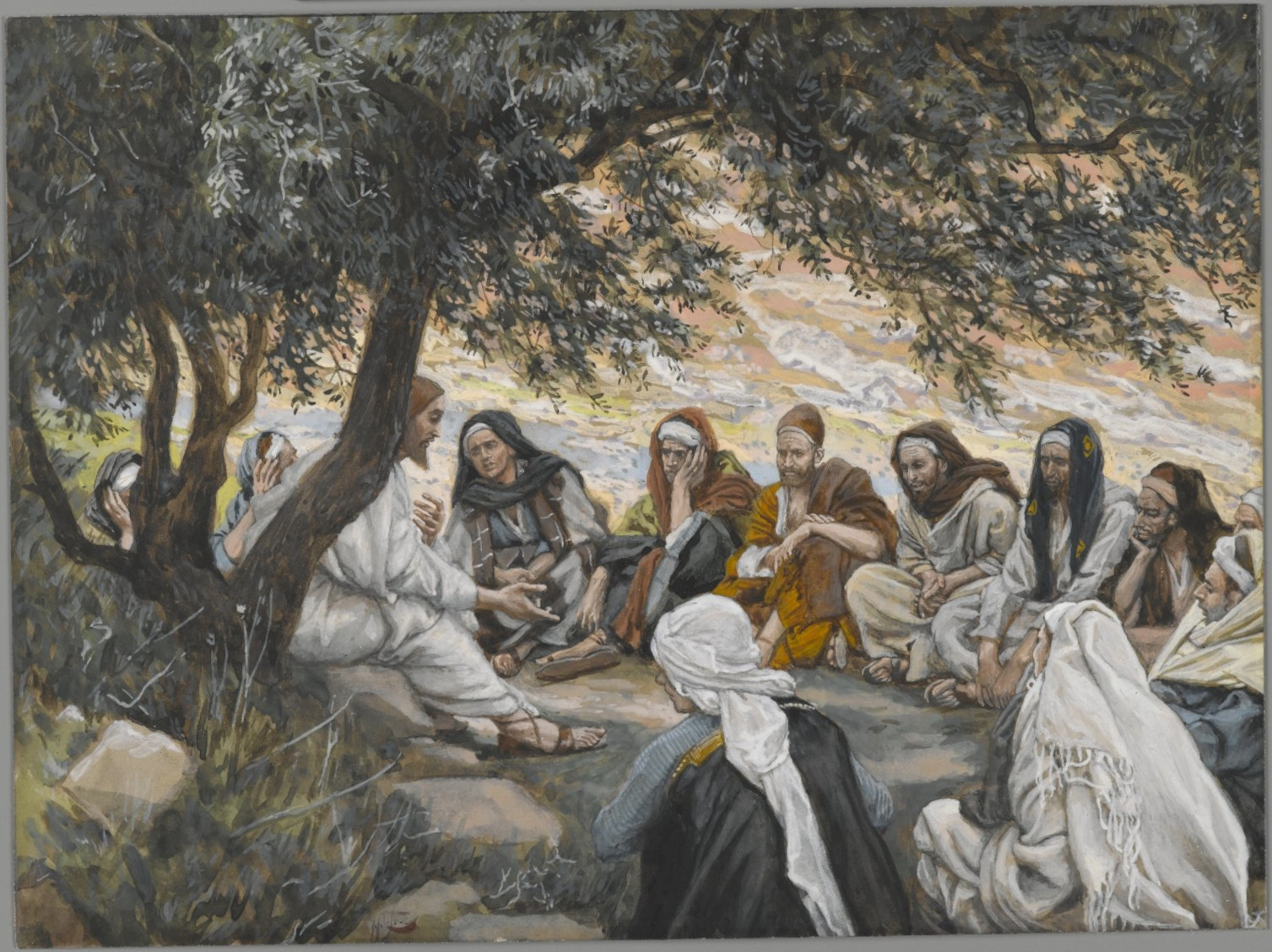
Wanted a picture here to break the endless text...
pretend this is Aldur and his disciples, ok?
From Wikipedia

Belsambar is actually an Angarak, and I wish he had been present in the main series, because that would have been an interesting dynamic to have during this cosmic battle involving the West and the East.  Although we do have Angarak allies throughout the series providing some of that, like Yarblek and Urgit, now that I think of it.  But still... there's definitely more Eddings could have done with this character.

Basically, all we learn is that Belsamar turned on his people after his parents were killed by Grolim knives, and he made his way west, summoned by Aldur.  He was very smart and the others never let him "keep an eye on the world" in the East... they didn't want him going back.  Eventually he becomes depressed after living too long and simply wills himself out of existence.

Belmakor is Melcene and quite practical, just like the Melcenes we meet in The Malloreon.  He's a smart man, has a lot of "very long conversations" with Beldin and came up with the idea for each disciple to have their own tower.  He also likes to call everyone "old boy," which gets annoying extremely quick, especially when Belgarath and Beldin start using it all the time, too.

Anyway, Belmakor ends up killing himself as well.  He had somewhat given up on the world, from what Belgarath tells us.  Perhaps he was too smart and because of it, like Belsambar simply got too bored with living for so long.

Point of interest: Regarding Beltira and Belkira's absence from The Malloreon, it's revealed in this book that they usually stay in the Vale to "guard" it.  There's also the major inconsistency in that they don't finish each others' sentences like they do in The Belgariad.  Eddings used that for the first series, then chucked it aside.  It's somewhat annoying to me.

Gaps of Time

Something that doesn't really get touched on in this book, or put into proper perspective, is the passage of time.  Belgarath is over seven thousand years old.  This book only details perhaps fifty to sixty years of that.  Much of the intervening years in Belgarath's life is glossed over - i.e. it will say something like "I spent a century studying this."

Think about this for a moment.  Many of us won't even live for a century.  For Belgarath, a century - perhaps even a millennium - is worth nothing more to him than a few sentences.  What did he really do all those centuries?  Wouldn't he get bored?  There's only so much you can learn - especially when the world doesn't advance (remember, the dual prophecies basically stagnate progress in this world until the final Choice in The Seeress of Kell).

It makes you wonder.  Did Eddings make the right choice about Belgarath's lifespan?  I can't imagine living for centuries with nothing worthwhile to mention.  Maybe since he knew he would never die, that he didn't rush to do as much as he could... he kind of drifted through life without any worries or sense of urgency.  That's the only way I can look at it.  Otherwise I find it quite unbelievable.

And Belgarath's road goes on and on...
Credit TheFriendlyFiend

Views on Religion

Now you've probably noticed that Belgarath has some strong opinions about religion throughout these books.  He and Beldin constantly remark on the fallacies of other religions and are disdainful of them frequently, especially priests.  Those of Nedra come to mind; he seems to have little patience with Tolnedrans in particular.

What this means, though, is that Belgarath is basically a hypocrite... Belgarath himself is religious, being the first disciple of a god.  Yet others who follow their own religions are sometimes objects of ridicule for him.  I mean, I understand that he has loyalty to his god, but the other gods exist too - and he knows it.  It's not a matter of belief, he is simply of the opinion that his god is best (isn't any religion like that?), and that his personal relationship trumps the organized religious mindset.

While trawling the internet for Eddings-related information I came across a blog post on Lantern Hollow Press that dives into this subject much better than I have.  I agree with the observation that this probably reflects the Eddings's opinion on organized religion.

Hey Girl

For such a long book (much longer than any of the previous volumes), I don't have anything else I want to talk about.  Kind of like how Belgarath ignores centuries of his life.  It's not worth mentioning, just like parts of this book.

Anyway, now that the grumpy father is out of the way, I'll move on to the beautiful daughter.  Next up is the second autobiographical entry in the series, Polgara the Sorceress.  As I mentioned before, I only read that once (when it came out) so I've pretty much forgotten the entire thing.  Let's go see how many centuries of her life is glossed over too, shall we?

Next:

Related Works
Novel - Polgara the Sorceress

Previous:

The Malloreon
Book 5 - The Seeress of Kell
Book 4 - Sorceress of Darshiva
Book 3 - Demon Lord of Karanda
Book 2 - King of the Murgos
Book 1 - Guardians of the West

The Belgariad
Book 5 - Enchanter's End Game
Book 4 - Castle of Wizardry
Book 3 - Magician's Gambit
Book 2 - Queen of Sorcery
Book 1 - Pawn of Prophecy

All maps by Shelly Shapiro

Tuesday, May 21, 2013

The Malloreon [5] The Seeress of Kell (1991)


So finally we come to it.  The culmination of thousands of years of dueling prophecies, good vs. evil, light vs. dark... it all comes down to this.  Like the previous volume, I had to wait for this one to come out in paperback.  As a teenager, I would sadly look at the hardback in my local B. Dalton or Waldenbooks, resist opening it to read it bit by bit on each visit to the store. I'm pretty sure I bought the paperback at Southroads Mall in Bellevue, NE, when I was in the 10th grade (not long before I first started The Wheel of Time).

Apparently that mall is long dead; we used to go to movies there a lot, but I personally stopped going after high school, stores closed and half of it was empty by that point.  I find empty malls to be disconcerting and a bit scary.  Makes me think of all the properties they've built in China, which sit empty, like ghost towns.

Man, was that really 22 years ago?

Also of note, as far as I know, The Seeress of Kell was Eddings's first and only #1 NY Times Bestseller.

Before you continue:
  • This is part 10 of my The Belgariad and The Malloreon retrospective
  • See this blog post for an overview of the retrospective
  • These blogs are most effective with your own re-read of both series
  • Warning: CONTAINS SPOILERS FOR BOTH SERIES

The Cover

This time, I actually have something to say about the cover: I don't like it.  Of all the things they could portray on the final cover of an epic 10-book sequence... they show two knights jousting?  Really?


I mean, I get that it reflects the dual nature of the Prophecies, and how they constantly meet and "battle" throughout time, but this cover is quite underwhelming.  The Perivor section of the book is not bad (more on that later), but there are so many better things they could have put on the cover.

The party approaching Kell, its giant mountain in the background.  Garion and Zakath fighting the dragon on Perivor.  Arriving at the Place Which is No More.  The party in the presence of the Sardion.  And on and on... they could have done so much better with this cover.

If you've read my blogs on The Wheel of Time, you've probably noticed that I'm not impressed by most covers, because most covers suck.  These days I generally prefer some kind of landscape or abstract imagery - no characters.  Because artists rarely draw characters properly.

However, take a gander at the alternate covers for The Seeress of Kell on the David Eddings Wikia.  Some are definitely better, probably the most amusing is the French one (shown farther down in this post).

Poledra

And so we finally learn the truth.  Poledra did not die giving birth to Polgara and Beldaran all those thousands of years ago.  She was visited by UL and told that she would need to make a sacrifice in order for the prophecy to take the right course and Belgarath and Polgara to fulfill their individual destinies.

I would say this was not exactly a shock to me, but it was a pleasant surprise.  It's also quite brutal to think about what she gave up for all this to come about.  She essentially had to walk away from her family for 4,000 years.  That's a long time, if you haven't noticed.  It's almost impossible to imagine what living that long is like; you'd think these people would go insane or be bored out of their minds living that long.

Anyway, Poledra is back for reals, she's the final addition to our party (The Woman Who Watches), joining them as the injured she-wolf at the beginning of the novel, revealing herself later on.  Belgarath will finally have to change his vagabond ways.  It's an interesting parallel to the way the world has been stuck in the same state, with very little change since Torak cracked the world.  Belgarath and his family can get on with their real lives, much like the world can get on with progressing once the two prophecies end.

Poledra just kickin' it, waiting for Belgarath

Beldin's Place in Prophecy

One thing that bothered me when I first read these last few books was how Beldin kept hanging around the party.  He was not mentioned by Cyradis in the first book as a necessary member of the group.  Yet from Book 3 onward, he's with the party every step of the way.  Usually the Prophecy is pretty strict about those things.  What gives?

Well... we learn why in this final book.  It seems that Zandramas cheats by trying to kill Garion's friends here and there.  And since the Prophecy lets that go, they allow Beldin to tag along on the Light side, when normally something would happen to keep him away.  How convenient.


Chaldan... or Chamdar?

I only mention this because it's one of the most notable printing errors I've ever seen in a book, and I shake my head every time I read it.  In The Seeress of Kell, the god Chaldan (patron god of the Arends) is referred to numerous times as Chamdar.  Which, if you remember, is the Grolim who killed Garion's parents, and who Garion killed way back in Book 2 of The Belgariad, Queen of Sorcery.

I don't know if this error was in the hardback version, or something unique to the paperback version.  I'm also assuming it has since been corrected.  I honestly have never checked current versions in stores today.  But either way, someone failed miserably when prepping this novel for publication.  A book goes through many hands and is reviewed many, many times.  How could they all have missed this?

Kell

Onto the locations for this volume.  Kell is somewhat shrouded in mystery, due to its remoteness, reclusive inhabitants and the fact that any Grolims that come near it are instantly struck blind.  But our party has the blessing of Cyradis, the eponymous character of this book, and considering they are not Grolims, they are allowed to approach Kell.


And for once, our party is in the lead.  Yay!  They've passed Zandramas, who being a Grolim, cannot go to Kell.  So she must wait for them to leave and follow them for a change.  Belgarath and Beldin are quite happy about this, though Garion seethes as usual, as he only wants his son back.

Anyway, Kell sits in the shadow of a massive mountain, the tallest in the world, one which no one has ever climbed.  Zakath is surprised at how advanced the place is.  He thought he knew everything about Mallorea... he is the Emperor, after all.  The people are rather dull, though.  Our party is here only briefly, to pick up Cyradis and for Belgarath to look at the only true copy of the Mallorean Gospels, which will tell him the location of the Place Which is No More.

They also learn that Seers have the knowledge of all the other Seers before them - they've been making choices at each meeting of Light and Dark ever since it began, and have existed for that sole purpose.  I've always found it odd that people like Polgara and Belgarath know very little about his.  They've lived for thousands of years.  Not once did they explore Kell?  Of course, you can always explain it away with Prophecy.  It didn't want them to go there, so any time they tried, something else happened to keep them away.  How convenient.

Perivor

It almost feels like Eddings finally ran out of interesting cultures to toss into his world, so instead of trying to create something new for Perivor, he simply reused Arendia.  Perivor is populated by descendants of shipwrecked Mimbrate Arends, so it's very medieval and formal, lots of theeing and thouing, knights and chivalry, things like that.


Cyradis tells our party they must go to Perivor to learn specifics regarding the location of the Place Which is No More.  Once there, Garion and Zakath have to keep their identities hidden by wearing their full armor at all times.  That sounds like it sucks.  They fight another dragon (a real one, not Zandramas) and have a final run-in with Naradas, Zandramas's top cohort, who managed to become the King of Perivor's most trusted councilor and advisor in a matter of days, just before our party gets there.  How convenient.  It's the archetypal evil-sycophant-influences-a-good-king storyline that you find all throughout fantasy and plays out as expected (Naradas dies, the King realizes he's been duped and now helps, Garion and Zakath can reveal their identities).

So after much foul treachery and flowery language, our heroes journey posthaste to the last major location of the story...

The High Places of Korim

Eddings has teased us about this location the entire series, but finally, in the first section of this book, when our party stops in Kell, we learn that the Place Which is No More is the High Places of Korim.


This is a location that I believe is referenced back in The Belgariad, when the tale of how Torak cracked the world is told.  The High Places of Korim is where he went to do the deed, creating the Sea of the East and splitting the world into the two major continents.  So it's only fitting that this would be the place where the Prophecies come together and all is mended.

In current times, instead of a mountain top, this is a reef in the ocean called the Turim Reef.  I think they messed up the map, though, since it says Korim Reef, despite everyone referring to it as Turim Reef.  Anyway, there's a cave where the Sardion has resided for centuries and it is here that the final meeting of Childs Light and Dark takes place.

No much else to say about Korim.  It's not a land or a kingdom, but since it has a section in the book, I'm obligated to cover it.

The Last Sacrifice

Good guys rarely die in fantasy stories, it seems.  At least not those in the 80's and 90's.  Eddings did kill someone in The Belgariad - only to bring him back to life a chapter later.  That would be Durnik.  This time, however, it's a permanent death.  Gasp!  Apparently each meeting of Light and Dark involves a sacrifice of some kind.  Foreshadowed since the end of Book 1, Guardians of the West, we knew it was coming.

Unsurprisingly, Toth is one who dies.  Toth, who is fairly invisible and one-dimensional (though not as bad as Eriond, who goes chapters without being mentioned or speaking).  It's also completely given away when they start talking about their tasks and Ce'Nedra thinks she is going to die because  she hasn't done hers yet (though she has; she told Zandramas where the Meeting is).  You think about the other characters and realize they all had specific tasks that were called out as completed (even the little snake Zith)... except Toth and Eriond.  Since you know what's in store for Eriond, that only leaves our mute giant.

When I get to his death, I'm actually more sad that Durnik has lost his friend than the fact that Toth is dead.  He was a gentle and nice man, but not a very prominent character that I really cared about.  He was just kind of there, fishing with Durnik, providing some muscle here and there.

Toth on the cover of the French
edition.  I always imagined him
with a bit more clothes on...

The Choices We Make

It seems rather odd that after all this time, after thousands of years of dual prophecies and constant crafting of events, that it all comes down to Cyradis simply choosing between two people, Geran and Eriond.  That's it.  She just picks one and that's the winner.  How convenient.

Well... what did you expect?  Another sword battle?  That's probably the worst way to chose a victor.  Trial by combat isn't about right or wrong, or what's just, it's simply who is stronger or more clever than someone else.  Thinking about what you're choosing, considering it from all sides and then making the choice - logically - that's a better way to decide between Light and Dark, yes?

Of course, this makes for a rather dull climax.  Cyradis wrings her hands a bit and she's supposed to just make a choice without thinking about it... but you know she has been influenced by the Light side while travelling with them.  How could you not choose the Light in her position?


Speaking of choices, the fact that Garion isn't sure at first who to choose for the new Child of Light makes me wonder how dumb he really is.  He regards his companions and wonders who he should choose, and hopes he doesn't screw it up.  Really?  This isn't the first time he's been portrayed as an idiot.  Remember the birds and the bees in Guardians of the West?  The way he acted when Ce'Nedra was giving birth?  Enough said.

The Places We Didn't Go

In The Belgariad, Eddings cleverly crafted a story that took us to every country and kingdom in the western continent, and had our main characters meet every monarch in the process (Garion met them all in person, except for King Gethell of Mishrak ac Thull... but then no one cares about the Thulls, so it doesn't matter).

In The Malloreon, Eddings did something similar, but there are some distinct places he missed.  Though our party set foot in each major "kingdom" (Ancient Mallorea, Karanda, Melcene Empire, Dalasian Protectorates), large sections were never explored.  The biggest omission is Gandahar, a jungle-like part of Melcene which I've always imagined as analogous to India.  In Sorceress of Darshiva, the armies of Zandramas and Urvon feature elephants, which come from Gandahar.  It's mentioned many times, but our party skips it.

Most of the Dalasian Protectorates are ignored as well.  We go to Kell, of course, but aside from that, only a few ports are visited briefly in this last volume. Given how unremarkable most of the cultures on this continent have been (compared to The Belgariad and its melting pot of anachronistic cultures), it's not a big surprise.  That and the fact that Eddings only had 3 books to tell the entire journey over Mallorea (compared to the 5 in The Belgariad), as we didn't reach Mallorea until partway through Book 3.

A Fond Farewell

As I've mentioned before, occasionally Eddings would jump back to the characters we left behind, providing a usually boring update on what the rest of the world is doing while our party is questing.  And at the end of the day, Barak and Co. just happen to arrive at Korim after the Meeting, to give our party a lift back to Perivor and ultimately home in the western continent.  How convenient.

Turns out, this gathering of at least one person that could represent each sovereign nation in the world provides an excuse to create a new peace treaty, called the Accords of Dal Perivor, the most obvious sign of the new age that has just begun.  Now that Eriond is god of the Angaraks, peace shall reign in the world, and this is the first step.

This also sets up a - again, convenient - way of saying goodbye to virtually every character that we've come to know and love over the course of 10 volumes.  One by one we drop them off over the next few chapters, saying one last goodbye to everyone.  It's actually very nicely done, and a great way to close the saga.  So Eddings is forgiven for working Barak and Co. back into the story when they were supposed to be absent.

And then there's the Epilogue, giving us a quick look at Garion and family a year or so after the Meeting...

But Wait, There's More!

Twins?!  Polgara had twins?  Yes, she did.  Finally, Polgara becomes a mother, an indication that the stasis her and some others (like Belgarath, and progress in the world in general) have been in has come to an end.  We have entered a new age, everyone is happy and there's really no more adventures to tell of, not when our enemies have changed for good (Angaraks moving from evil Torak to benevolent Eriond).

Of course, Eddings and Lester Del Rey thought otherwise.  Not content to let the saga end after this, riding the popularity of the series, Eddings wrote 3 more books in this world - two character biographies that function as a mix of prequel and history lesson, and one reference text - all co-authored with his wife, Leigh.

The character biographies are for Belgarath and Polgara, unsurprisingly.  Who else would get an entire novel to themselves?  The books are entitled Belgarath the Sorcerer and Polgara the Sorceress.  I've only read them once, back when they came out.  So it will be fun to finally read them again, almost for the first time.

The reference book is The Rivan Codex, which I have not read.  It mostly concerns background material for the series, along with some essays by Eddings on fantasy.  I have no idea what to expect, but it will be a good one to end this retrospective on, since it's Eddings's own look back on his series.

Stay tuned for blogs on for those.


Next:

Related Works
Novel - Belgarath the Sorcerer

Previous:
The Malloreon
Book 4 - Sorceress of Darshiva
Book 3 - Demon Lord of Karanda
Book 2 - King of the Murgos
Book 1 - Guardians of the West

The Belgariad
Book 5 - Enchanter's End Game
Book 4 - Castle of Wizardry
Book 3 - Magician's Gambit
Book 2 - Queen of Sorcery
Book 1 - Pawn of Prophecy

All maps by Shelly Shapiro

Tuesday, April 16, 2013

The Malloreon [4] Sorceress of Darshiva (1989)


I was in new territory when I first read this book, because I had to wait for it. It had only been released in hardbook once I finished the previous entry, Demon Lord of Karanda, and as an 8th grader with a paltry allowance, I could not afford it.  So I had to wait for the paperback, which didn't come out until November 1990.

The agony!  This was my first experience with having to wait for the next entry in an ongoing series.  Looking back, it wasn't all that bad since I only had to wait a couple of years for these last two books.  That's nothing compared to the 20 years I experienced as an early The Wheel of Time reader.  But of course you can read all about that in those blogs.

Anyway, all starts to become clear as our party now continues their trek, this time through the Melcene Empire.  This is my favorite entry in The Malloreon, with the last book, The Seeress of Kell, coming in a close second.

Before you continue:
  • This is part 9 of my The Belgariad and The Malloreon retrospective
  • See this blog post for an overview of the retrospective
  • These blogs are most effective with your own re-read of both series
  • Warning: CONTAINS SPOILERS FOR BOTH SERIES

What Everyone Else is Doing

We open this book with a chapter that doesn't focus on Garion and our heroes, but rather all the people that they left behind in the West.  It's kind of a dull opening, nothing more than a series of cameos to sate those readers who might miss those characters.  There was one in the previous book, I believe.  Later on, there's another, and I honestly want to skip over them half the time, because Garion's quest is much more interesting.

However, it is somewhat necessary, as it explains how Barak and the other warriors we had to leave behind meet up with our heroes near the end of the final book.  Which is rather amusing... we know they won't be able to catch up to Garion, because the prophecy won't let them.  So it's fun to see misfortune befall them (mainly because they can be pretty stupid at times, i.e. Lelldorin and Mandorallen).

The Cover

What else can I say about these covers that I haven't already said before?  Same style as usual, nothing too exciting.


This time we have Zandramas, Garion and Poledra in her wolf form.  They are at a farm, and this is during the attack of Zandramas on them in the night (she first attacked in her dragon form).  The background, of course, shows the Melcene Empire, which is featured in this volume.

Garion seems a bit short in this picture, if you ask me... Zandramas just towers over him.  But it's good that Zandramas is on the cover.  You can't title the book after a character and not put them on the cover!  Oh wait... they did that for King of the Murgos.  And they do it for the next book, The Seeress of Kell... so never mind, I guess they can.

The Complete Zandramas

As I mentioned in my post for Demon Lord of Karanda, each book in this series progressively reveals an aspect of our antagonist, Zandramas.  Here we finally learn her background - where she came from, how she became the Child of Dark, etc - conveniently told to us by a Melcene bureaucrat Garion and Co. find in an abandoned village in Peldane.

French cover... not sure why Zandramas
is pictured in the snow, but she looks cool.

After Torak was killed, the Dark Prophecy fled into a new Child of Dark: Zandramas.  She was consumed by it and fled into the forest for years.  Eventually she returns to begin preaching that a new god of Angarak is coming.  Of course Urvon, the last living disciple of Torak, didn't like this.  So they've been at each others' throats ever since - and it's all coming to a head in this book as their armies converge in Darshiva.

Of course, when they hear that Zandramas intends to be the bride of the new god, should the Dark win... Ce'Nedra's more upset with the fact that Zandramas would be her daughter-in-law more than anything else.  Women!

Silk's Empire

This book also gives us more insight into Silk and Yarblek's vast merchant empire that they started building after The Belgariad.  Throughout this series we have been learning of their exploits, and they have offices everywhere it seems.  Here they put it to good use in Melcene when tracking Zandramas and the Sardion.

I always felt this was another sign of the world changing and finally moving on from the repetition and stagnation of the dual prophecies.  Before The Belgariad, Silk and Yarblek would have never been able to do something like this, not with Torak still alive, the Grolim Church strong and the enmity between Alorn and Angarak.  But much like the fall of any type of oppressive society, with the death of Torak trade opens up and the West infiltrates the East, so Silk's successes are not exactly surprising.

To Silk, however, it's all a game.  He's on his way to literally becoming the richest man in the world, but actually having the money doesn't seem to mean that much to him.  Just the fact that he bests all his opponents.  Money is simply the way they keep score.  Men!

Melcena

So our party finally leaves the Seven Kingdoms of Karanda, heading for the Melcene Empire.  The island of Melcena reminds me of Tolnedra, only better.  Tolnedra prides itself on their educational system and modernization, yet they won't acknowledge the existence of sorcery.  The University of Melcene here is a greater center of learning than that found in Tolnedra, plus they accept sorcery and magic.  It's essentially the greatest center of learning in Eddings's world.


Here our heroes follow the trail of the Sardion and Zandramas (they lead to the same place), and it's here that they learn much of the history of the Sardion from the clubfoot Senji, who is really an untrained sorcerer that's lived for a few thousand years himself.  The couple of chapters where Belgarath, Beldin and Garion visit Senji are probably my favorite of the entire saga.  There's a lot of history and discovery, and some memorable dialogue as well.

The Sardion resided at the University for thousands of years, but eventually it was stolen... and since it left, so must we.  At this point Belgarath learns that they must go to Kell to discover the location of the Place That is No More.  So off we go!

Peldane

Simply another region of Melcene that our party must cross, there's not really much to say about Peldane.  It's torn by war and we slowly make our way across it, hot on Zandramas's trail; they've pulled within a day or so now.  No special history, no unique people - pretty much the same as anywhere in Melcene.  A stark contrast to the variety of cultures found from region to region in The Belgariad.


A few important things do happen here.  One is that they learn Zandramas's backstory from a Grolim they capture and drug.  The other is another encounter with Zandramas in her dragon form, along with another appearance of Poledra, both on a farm that reminds our main characters of Faldor's Farm, way back in the very first book, Pawn of Prophecy (from the cover).  Poledra still has more to do; we'll be seeing more in the next volume.

Darshiva

This is the home of everyone's favorite Child of Dark, Zandramas.  Our party is cutting across these regions because they are heading for Kell... but now they're in danger of being sandwiched between two armies: those of Zandramas and Urvon, fighting for dominion of the Angarak Church (which is ultimately pointless, considering where the story is headed).  Zakath's army is converging along the River Magan as well... so you can guess what will happen...


...Zakath rejoins our party.  Zakath's army captures them when they try to cross the Magan to get into Darshiva.  Cyradis, the Seeress of Kell, orders Zakath to join them or risk dying within the year.  Zakath has a secret crush on Cyradis, so it doesn't take much convincing to get him to go in the end.  We also get new party members in the form of a she-wolf and her cub... the identities of which are revealed in the next book, and which will complete our party just in time for the Meeting.

And finally, Durnik completes a very important task at the book's climax.

A New Disciple

Durnik not only is meant to be a sorcerer, but a new disciple of Aldur, perhaps to replace Zedar the Apostate.  He earns his amulet by defeating the Demon Lord Nahaz at the end of the book, banishing him and Urvon to Hell with a giant hammer, weighted by the power of Aldur.  It's a touching scene since we all know that Aldur has not chosen another disciple in a long, long time.  Beldin and Belgarath finally get a new brother.

Of course, the first time I read it I still expected Durnik to be renamed to Beldurnik, but it doesn't happen.  Which is good... it just doesn't seem right.  Plus, being a Sendarian (one of the peoples who don't have a patron god), he's never been very pious beyond respecting all seven Gods for major holidays like Erastide.  So it seems weird... but it makes more sense after the next book.


Durnik fighting Nahaz on the Turkish cover

Of Sorcerers and Amulets

As part of his induction into disciplehood, Durnik receives an amulet with an engraving of a hammer, to go along with those of the other sorcerers (Belgarath = Wolf, Polgara = Owl, etc). And keeping with the theme of repetition from The Belgariad, this is essentially another one, when you really think about it.

In that series, Garion becomes Belgarion and gets an amulet of his own, which features... um, so until I was writing this I didn't even know what was on his amulet.  If you remember, Garion received his between Pawn of Prophecy and Queen of Sorcery, right at the beginning of our saga.  He starts Queen of Sorcery with it, and just mentions that he doesn't like wearing it, and he takes it off a few times when he shouldn't have.  But never do we learn what is on it.


I did some searching online and in the books and confirmed that what's on it is never revealed. It's simply described as "curiously carved" with a "strange design."  It's not important in the grand scheme of things, but I wonder why Eddings never revealed what the design was, when the designs of others' were clear.  Maybe he just forgot.  We'll never know.

Speaking of sorcerers... are you wondering what happened to Beltira and Belkira, the twin disciples from The Belgariad who finish each other's sentences?  So am I.  They never appear in this series.  Eddings ignores them entirely.  I wonder what was on their amulets... or Beldin's, for that matter.  A falcon, perhaps?

Consistent Cultures

At this point, after travelling through Ancient Mallorea, Karanda and Melcene, you may have noticed that the cultures here on the Mallorean continent are actually somewhat consistent and actually make sense with each other (*gasp*) compared to the hodge-podge of anachronistic cultures found on the unnamed western continent of The Belgariad, and which I mentioned way back in my post for Queen of Sorcery.

Eddings obviously created the Mallorean continent's history separately at a much later date than The Belgariad.  This should be clear given how much of that continent is godless and doesn't fit into the theology that dominates the story at the beginning.  Well... I'm not sure about Mallorea, but apparently everything was done deliberately.  Not too long ago, on an old FAQ, I found this quote from Eddings, featured in Contemporary Authors: New Revision Series, Volume 35 (essentially a reference book with biographical info on authors of the day):

"My current excursion into fantasy has given me an opportunity to test my technical theories [of writing]. I made a world that never was, with an unlikely theology splattered against an improbable geology. My magic is at best a kind of pragmatic cop-out. Many of my explanations of how magic is supposed to work are absurdities - but my characters all accept these explanations as if there was no possibility of quibbling about them, and if the characters believe, then the readers seem also to believe."

Of course his magic system has always been weak, but it has never bothered me, since it worked in the confines of the world, and as he mentions, the characters believe in it.  And if you remember, I also went into great length about distances and the size of the world itself, in my post for King of the Murgos.  They make no sense, and coupled with his comment on theology and geology, you can see why: he didn't intend for it to make sense, if his quote is to be believed.  He simply incorporated whatever he wanted to in the series to "test" his "technical theories" - whatever that means.

If an author today came up with a world like this, it would be widely panned as unrealistic, considering how much more plausible and believable fantasy worlds are now.  Does that lessen Eddings's work?  Not to me... I still find it enjoyable, and it's important because it was the standard of popular fantasy at the time.  To understand where fantasy is heading, it's important to know where it's been.


Next:

The Malloreon
Book 5 - The Seeress of Kell

Previous:

The Malloreon
Book 3 - Demon Lord of Karanda
Book 2 - King of the Murgos
Book 1 - Guardians of the West

The Belgariad
Book 5 - Enchanter's End Game
Book 4 - Castle of Wizardry
Book 3 - Magician's Gambit
Book 2 - Queen of Sorcery
Book 1 - Pawn of Prophecy

All maps by Shelly Shapiro